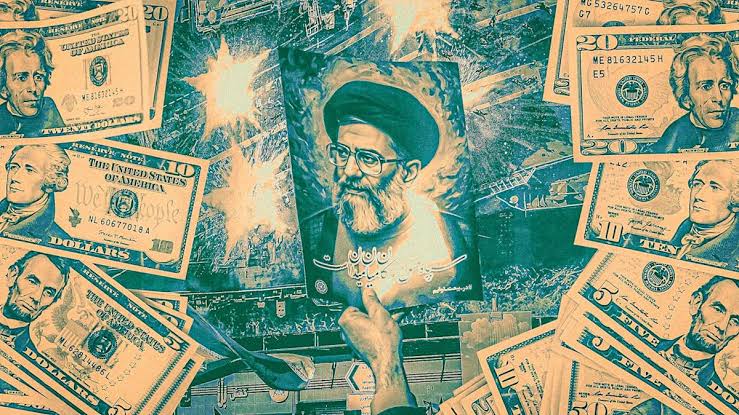
An account created less than a month before the US and Israeli strikes on Iran placed a bet on the exact outcome – and walked away with more than a quarter of a million dollars. It was not alone. More than 150 accounts correctly bet over $1,000 each on the timing of those strikes in the days before they happened.
Now a US senator is accusing the Trump administration of using classified information to profit from the war. A bill has been introduced to ban military betting entirely. And the platform at the center of it – Polymarket – is not required to explain anything to anyone.
For background on how Polymarket works and why war markets exist on the platform, read our full analysis of war betting on Polymarket.
What Actually Happened on Polymarket
Polymarket is a cryptocurrency-based prediction market where users trade contracts on real-world events. Each contract pays $1 if the event resolves as predicted and $0 if it does not. Prices fluctuate based on what the market collectively believes the probability to be.
In the days before the US and Israeli strikes on Iran, several markets on the platform saw unusual activity. The most specific: bets on the exact date the strikes would occur. One newly created account placed a large position and collected over $250,000 when the strikes happened as predicted.
A separate market had offered users the chance to bet on whether Iran’s supreme leader, Ali Khamenei, would no longer hold power by February 28 – the date of the first strikes. He was killed that day.
These are not the kind of bets someone wins by reading the news carefully. The information required to predict the exact date of a classified military operation is not publicly available.
150 Accounts. All Correct. All Anonymous.
The single winning account is not what makes this story significant. The pattern is.
According to reporting by the New York Times, more than 150 separate accounts placed winning bets of over $1,000 each on the Iran strikes in the days before they occurred. All of them were correct. All of them remain anonymous because Polymarket processes payments through cryptocurrency.
The statistical question is straightforward: what is the probability that 150 independent bettors, acting without coordinated information, all correctly predicted a classified military operation within days of its execution? The answer is not a number that supports coincidence as the explanation.
A comparable situation has already resulted in a military investigation. Several Israeli soldiers are currently under internal inquiry for allegedly using classified operational information to place bets on Polymarket about strikes Israel would or would not pursue. The Iran situation has the same structural profile – a large number of correct bets on specific classified events, placed by accounts that cannot be identified.
The Nuclear Bet Polymarket Quietly Removed
The Iran strike markets are not the only controversy the platform has navigated recently. Polymarket had previously allowed users to bet on whether a nuclear detonation would occur within the current year. The market attracted significant attention and criticism before the platform removed it – without a public explanation of why it was taken down or what the decision process was.
The removal happened the week before this story broke. Betting on Iran conflict outcomes – including strike timing, Strait of Hormuz closure, and military target selection – remains active on the platform.
Polymarket has not responded to press inquiries about either the nuclear market removal or the insider trading allegations.
A Senator Accuses the White House
US Democratic Senator Chris Murphy did not frame his concerns as a theoretical risk. He made a direct accusation.
“The Iran War is fuelling a new kind of corruption: White House officials secretly profiting off war,” Senator Murphy posted on X. “It’s disgusting. We need to ban it.”
Together with Democratic Congressman Mike Levin, Murphy introduced a bill that would prohibit betting on military actions, regime change, or deaths. The proposed legislation is a direct response to the pattern of suspiciously accurate bets on classified military operations.
“We need answers, transparency and oversight,” Levin wrote separately.
Neither the Department of Defense nor the White House has responded to requests for comment on the wagering activity.
The Trump Family Connection
The political context around Polymarket is not incidental. It is specific and documented.
Donald Trump Jr. has invested in Polymarket through his venture capital firm and sits on an advisory board for the platform. He is also a strategic advisor to Kalshi, Polymarket’s main competitor, and the director of an upcoming prediction market connected to the Truth Social platform called Truth Predict.
The Trump administration reversed a federal ban on Polymarket for US users in 2025. The platform had been prohibited since 2022 when the Commodity Futures Trading Commission found it non-compliant with gambling legislation. More than 30 countries had reached similar conclusions.
The deregulation of cryptocurrency oversight under the current administration has also removed institutional mechanisms for investigating potential crypto fraud – including the kind of anonymous, crypto-denominated insider trading that the Polymarket pattern appears to represent.
Why There Is Almost No Oversight
The combination of factors that makes Polymarket difficult to regulate is not accidental – it reflects deliberate structural choices.
| Feature | Why It Limits Oversight |
|---|---|
| Cryptocurrency payments | Bettors remain anonymous. There is no name attached to a winning account. |
| No trading fees | Revenue reportedly comes from data sales, not transactions – making financial regulation harder to apply. |
| Classified event markets | Investigating insider trading requires identifying what information the bettor had. Classified military operations make that nearly impossible without government cooperation. |
| Deregulated crypto environment | The agencies that would normally investigate crypto fraud have been significantly reduced in scope under the current administration. |
The result is a platform where someone can potentially use classified government information to place anonymous cryptocurrency bets on military operations they helped plan – and there is currently no clear legal mechanism to detect, investigate, or prosecute it.
Why Australia Banned It
Australia’s position on Polymarket is unambiguous. The Australian Communications and Media Authority has classified it as an interactive gambling service. It is unlicensed in Australia and geoblocked – prohibited from operating in the country.
The regulatory logic is the same one the CFTC applied in 2022: whatever Polymarket calls itself, the functional reality is that users are placing real money bets on uncertain outcomes, which meets the legal definition of gambling in most jurisdictions.
More than 30 countries have reached the same conclusion independently. The 2025 reversal in the US is the exception, not the rule – and it is directly connected to political decisions made by an administration with documented financial ties to the platform.
Reducing a War to a Wager
Beyond the legal and oversight questions, there is a simpler problem that gets less attention than it deserves.
The Iran conflict has killed more than 1,200 people. Families are displaced. Communities are destroyed. The war maps that Polymarket users consult to inform their bets are the same maps that civilians in the region check to determine whether they need to flee their homes.
Dr. Louise Francis, a public health and gambling expert at Curtin University, described the dynamic directly: “When gambling operators turn war and human suffering into a betting market, it risks trivialising events that involve real loss of life, displacement and long-term trauma for affected communities. Unlike sporting events, wars are not voluntary or bounded contests. Treating them as betting markets risks desensitising the public to human suffering.”
The counterargument – that prediction markets improve the accuracy of public forecasts and help policymakers understand collective probability assessments – carries genuine weight in many contexts. It is much harder to sustain when the bets are placed by people who may have helped plan the events they are wagering on.
What the Proposed Bill Would Do
The Murphy-Levin bill, if passed, would prohibit betting markets on military actions, regime change, and deaths. It would represent the first explicit federal restriction on the content of prediction markets – distinct from the regulatory question of whether they constitute gambling.
The bill faces an uncertain path. The Trump administration has consistently moved toward deregulation of prediction markets and cryptocurrency, not toward restriction. With Donald Trump Jr. as a documented investor in the platform the bill targets, the political dynamics are not favorable for its passage in the near term.
What the bill’s introduction does accomplish is forcing a public conversation about a question that the current regulatory framework has no clear answer for: when anonymous cryptocurrency bettors correctly predict classified military operations at scale, in the days before they happen, what is the appropriate response from a government that has dismantled most of the oversight mechanisms that might have caught it?
Polymarket did not respond to media requests for comment referenced in source reporting for this article. The Department of Defense and White House did not respond to requests for comment on wagering activity related to the Iran conflict.
Related coverage: For deeper context, visit our Polymarket News hub and our evergreen explainer What Are Prediction Markets?.




Leave a Reply