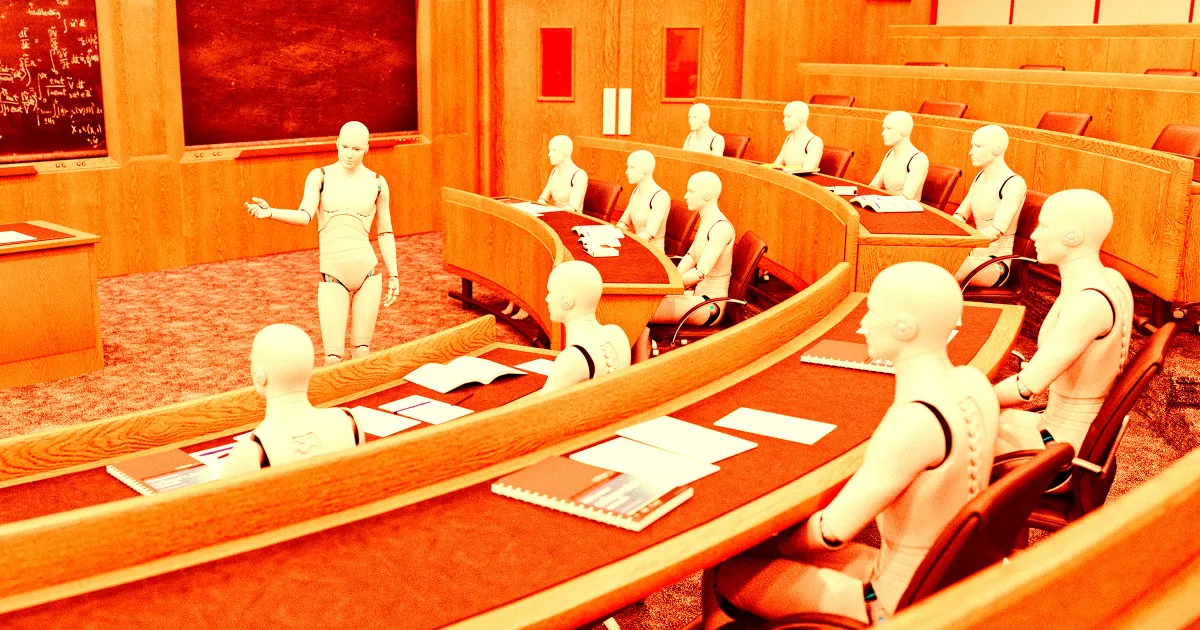
Automation’s Steady Encroachment
Mercor, a Silicon Valley startup, has been at the forefront of this unsettling development. The company has employed a vast number of individuals, often highly educated and underemployed, to train AI models that are intended to replace them. This model of operation is not merely confined to the United States; a parallel situation is unfolding in China, where employees are similarly instructed to document their workflows to facilitate automation.
This approach is indicative of a broader trend in which companies view human labor as a liability rather than an asset. The shrinking of job roles and the increasing dependence on AI is reminiscent of historical shifts seen during the Industrial Revolution. Back then, workers faced similar fears as machines began to replace manual labor, leading to significant social upheaval. Today, the stakes are arguably even higher as the pace of technological change accelerates.
Documenting Workflows for AI
According to reports from MIT Tech Review, workers in China have been directed to meticulously outline their tasks with the objective of automating specific roles using AI technologies such as OpenClaw. This open-source software has gained significant traction in the country and exemplifies the eagerness of businesses to eliminate reliance on human labor, which is often viewed as costly and inefficient. The employees, caught in this precarious situation, find themselves grappling with the effects of their contributions.
Consider how this method of documenting workflows can be seen as a double-edged sword. On one hand, it allows organizations to streamline operations and enhance efficiency. However, it also strips workers of their autonomy and reduces their roles to mere cogs in a machine. The psychological toll of such a transformation cannot be understated; employees may feel devalued and expendable, particularly when they are aware that their own knowledge is being utilized to create their replacements.
The Viral Rise of Colleague Skill
In a fascinating twist, a GitHub project called Colleague Skill emerged, initially as a satirical commentary on the rise of automation. The tool captures chat histories and profiles of coworkers, generating detailed workplace manuals that outline their tasks. Despite its origins as a joke, it has resonated deeply within the Chinese workforce, illuminating the fears and frustrations surrounding AI integration.
Amber Li, a Shanghai-based tech worker, expressed her astonishment at the tool’s effectiveness, noting its ability to encapsulate not only job functions but also the unique idiosyncrasies of individuals. The unintended consequences of such tools have sparked intense discussions about the erosion of human dignity and agency in an increasingly automated work environment.
Government Concerns and Cybersecurity Risks
The rapid proliferation of AI tools like OpenClaw has not gone unnoticed by regulatory bodies. Government agencies and state-owned enterprises have issued warnings against the installation of such software on employee devices, citing cybersecurity threats and the potential for significant data loss. The tension between the pursuit of efficiency through automation and the necessity of safeguarding employee rights and security is palpable.
Employee Resistance and Backlash
In response to the looming threat of AI-driven replacements, some workers have begun to push back. Koki Xu, an AI product manager, developed a tool designed to rewrite worker manuals into non-actionable language, effectively undermining the clear directives typically associated with AI training. Xu’s shift from writing an op-ed to creating a tangible tool illustrates a growing sentiment among employees who wish to actively participate in shaping the future of work.
This resistance reflects a broader trend of grassroots movements emerging in response to the encroachment of automation. Workers are not merely passive victims; they are becoming proactive agents in the conversation about how AI should be integrated into the workplace. This is reminiscent of labor movements throughout history, where workers banded together to advocate for their rights, often in the face of overwhelming corporate power.
Debating the Efficacy of AI Agents
As the discourse surrounding AI agents continues, experts are divided on their actual capacity to replace human workers comprehensively. While some advocate for the efficiency and productivity gains associated with automation, others caution against overestimating AI’s capabilities. Employees, however, are increasingly determined to engage in these discussions, recognizing that their livelihoods are at stake.
For instance, while AI can handle repetitive tasks with remarkable speed and accuracy, it still struggles with nuanced decision-making and complex emotional intelligence that human workers possess. This raises an important question: should the goal of AI development be to replace human labor entirely, or should it be to augment human capabilities? The answer to this question will have profound effects on the future of work, requiring collaboration among technologists, business leaders, and workers themselves.
Human Agency in an Automated Future
The core of the issue lies in the question of human agency. As automation becomes more entrenched, the role of workers in shaping how AI is utilized is crucial. Xu’s belief in the importance of staying informed about technological trends underscores the necessity for employees to advocate for their interests and ensure that human input remains a vital part of the equation.
Related reading
The intersection of automation and employment represents a defining challenge of our time. As workers in China find themselves training the very systems that threaten their positions, the broader effects on the future of work cannot be ignored. The balance between technological advancement and the preservation of human dignity remains precarious, and how society navigates this complex landscape will shape the workforce of tomorrow.
Source: futurism.com
Summary and Outlook
As this situation unfolds, the editorial desk at Quick Feed News will continue to track major announcements, market-moving signals, and regulatory reviews. For more related insights on technological developments and U.S. business headlines, keep exploring our homepage.
Frequently Asked Questions (FAQ)
Q: What is the main technological breakthrough discussed in this article?
A: This development represents a significant step in autonomous AI scaling, enterprise integrations, and high-performance computing capabilities designed to streamline business workflows.
Q: How does this impact regular users and developers?
A: It lowers the barrier to deploying advanced AI systems locally, though it raises questions regarding hardware requirements, API costs, and data governance policies.
Q: What are the security or privacy implications?
A: As AI models integrate deeper into workflows, securing proprietary data and protecting against supply-chain risks remains a top priority for IT executives.
More Stories
 Online Cognitive Tests Are Becoming Product Experiences, Not Just Score PagesMay 05, 2026
 The best AI dictation apps, tested and rankedMay 02, 2026
 Tesla Reports Q1 2026 Earnings Amid Plans for Optimus Robot FactoryApr 22, 2026
 SpaceX Offers $60 Billion to Acquire AI Startup Cursor, Disrupting $2 Billion FundraiseApr 22, 2026
Leave a Reply