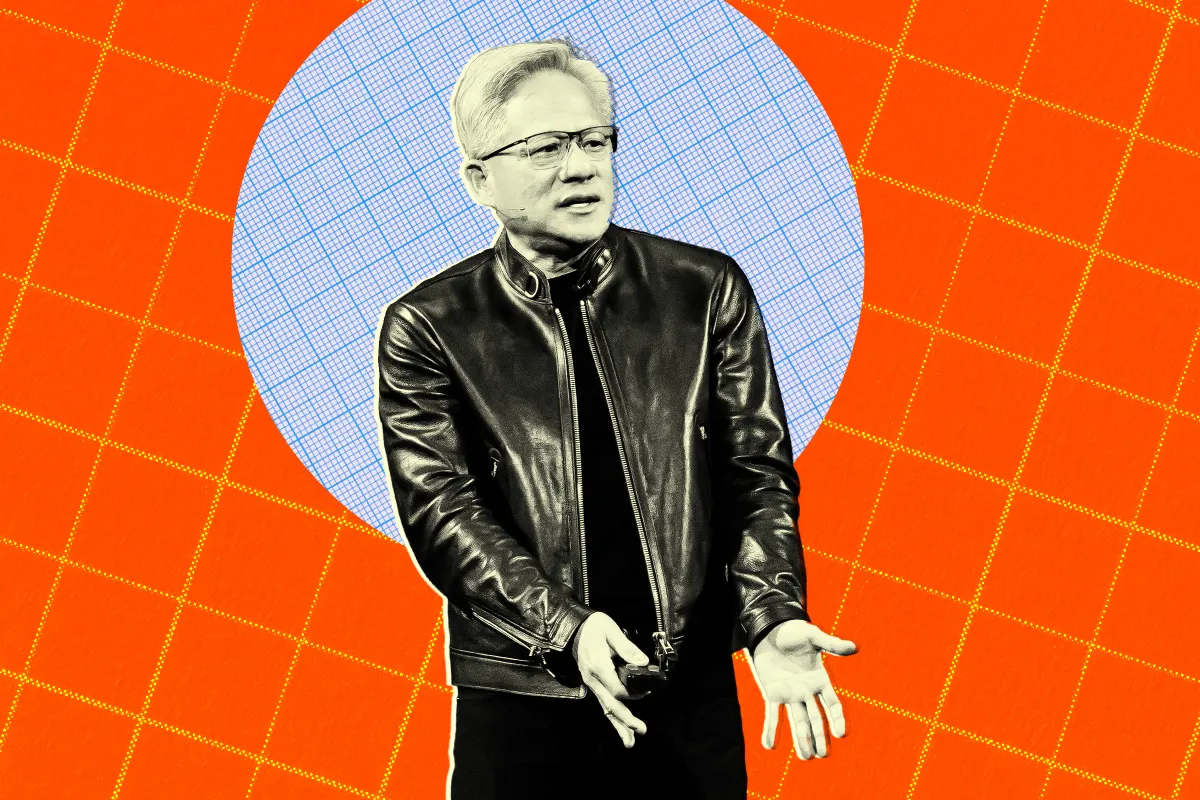
The recent remarks by Nvidia CEO Jensen Huang on a podcast have stirred significant discussion regarding the intersection of technology, national security, and global competition. Huang’s emotional response to a question about the effects of selling advanced AI chips to China highlights the complexities and challenges that companies face in a rapidly evolving geopolitical landscape.
The Podcast Exchange
During a recent taping of Dwarkesh Patel’s podcast, Huang was confronted with a pointed question regarding the potential national security risks associated with Nvidia’s AI chip sales to China. The inquiry, which referenced the capabilities of models like Anthropic’s Claude Mythos, provoked an intense reaction from Huang, who asserted that the notion of the U.S. losing its technological edge in China was fundamentally flawed.
Huang’s Emotional Outburst
“The premise that ‘even if we competed in China, that we’re going to lose that market anyways ‘you’re not talking to somebody who woke up a loser,” Huang retorted, reflecting a deep-seated conviction in his company’s ability to innovate and maintain a leadership position in the global tech arena. His frustration was palpable as he dismissed the idea that withdrawing from the Chinese market would prevent the rise of a robust independent tech industry within the PRC.
The Risk of Technological Decoupling
Huang argued that if Nvidia were to withdraw its advanced technologies from China, it would only serve to bolster China’s self-sufficiency in tech. He emphasized the importance of keeping AI development rooted in the American ecosystem. “We want to make sure that all the AI developers in the world are developing on the American tech stack, and making the contributions, the advancements of AI ‘especially when it’s open source ‘available to the American ecosystem,” he stated. This sentiment underscores a broader apprehension among U.S. tech leaders about the effects of a fragmented global tech landscape.
China’s Technological Aspirations
While Huang’s views reflect confidence in American technological superiority, the reality is increasingly complex. Chinese authorities have been actively working to reduce the country’s reliance on U.S. technology, particularly in the wake of trade tensions and tariffs imposed during previous administrations. The Chinese government has launched various initiatives aimed at fostering homegrown innovation and reducing dependency on foreign technology, particularly in critical sectors like AI and semiconductors.
Competitive Landscape in AI
As the race for AI supremacy accelerates, the stakes are higher than ever. Nvidia currently holds a dominant position in the AI chip market, but the rapid pace of technological advancement in China cannot be overlooked. Companies in China are leveraging significant investments and a large talent pool to develop their own AI capabilities. This growth trajectory poses a potential threat to Nvidia’s market share and raises questions about the sustainability of its competitive advantage.
Historical Context of Tech Rivalry
The technological rivalry between the U.S. and China is not new. It can be traced back to the early 2000s when China began aggressively investing in its technology sector as part of the “Made in China 2025” initiative. This program aimed to transform China into a global leader in technology and innovation, with a particular focus on sectors like AI, robotics, and semiconductors. The U.S., on the other hand, has historically been the leader in technological advancements, but as China strides forward, the balance of power is being tested.
For China, the pursuit of self-sufficiency in technology means investing heavily in research and development. Chinese companies like Huawei and Alibaba are increasingly focusing on building their own chip manufacturing capabilities and AI research teams. The Chinese government’s support for these initiatives is paving the way for a more autonomous tech landscape, which could further complicate relationships with Western companies.
Case Studies of Decoupling Effects
A prominent example of the effects of decoupling can be observed in the semiconductor industry. The U.S. has imposed restrictions on companies like Huawei, preventing them from obtaining advanced chips and technologies from American firms. This has forced Huawei to invest heavily in its own semiconductor manufacturing capabilities, which, while initially a setback, has led to accelerated growth in China’s domestic chip industry.
In addition, China’s commitment to achieving self-reliance in technology has been evident in its massive investments in R&D. In 2020, China allocated over $150 billion towards semiconductor development, with the aim of reducing its reliance on foreign technology. This has resulted in the establishment of several advanced semiconductor manufacturing plants and AI research labs, posing a significant challenge to U.S. companies like Nvidia.
Future of AI Development
The future of AI development will likely be shaped by these ongoing tensions. As companies like Nvidia strive to maintain their leadership positions, they must navigate a landscape marked by increasing competition from Chinese firms that are rapidly innovating. This dynamic may lead to a bifurcated global tech ecosystem, where American and Chinese technologies develop along separate paths, each with its own set of standards and practices.
The potential fragmentation of the global tech landscape raises questions about collaboration and innovation. If U.S. and Chinese companies continue to operate in silos, the advancements in AI may not benefit from the synergies achieved through cross-border collaborations. This could result in slower overall progress in the field, impacting industries that rely on AI, from healthcare to finance.
Geopolitical Consequences
Beyond the immediate business effects, the geopolitical consequences of these developments cannot be ignored. As countries increasingly view technology through a national security lens, the potential for conflict may rise. The tech race between the U.S. and China could lead to a new form of Cold War, where technological supremacy becomes a key battleground.
Related reading
The complexities surrounding the sale of AI chips to China reveal a delicate balance between fostering innovation and addressing national security concerns. As global competition heats up, how companies like Nvidia navigate these challenges will have lasting effects on the future of technology.
Source: futurism.com
Summary and Outlook
As this situation unfolds, the editorial desk at Quick Feed News will continue to track major announcements, market-moving signals, and regulatory reviews. For more related insights on technological developments and U.S. business headlines, keep exploring our homepage.
Frequently Asked Questions (FAQ)
Q: What is the main technological breakthrough discussed in this article?
A: This development represents a significant step in autonomous AI scaling, enterprise integrations, and high-performance computing capabilities designed to streamline business workflows.
Q: How does this impact regular users and developers?
A: It lowers the barrier to deploying advanced AI systems locally, though it raises questions regarding hardware requirements, API costs, and data governance policies.
Q: What are the security or privacy implications?
A: As AI models integrate deeper into workflows, securing proprietary data and protecting against supply-chain risks remains a top priority for IT executives.
More Stories
 Online Cognitive Tests Are Becoming Product Experiences, Not Just Score PagesMay 05, 2026
 The best AI dictation apps, tested and rankedMay 02, 2026
 Tesla Reports Q1 2026 Earnings Amid Plans for Optimus Robot FactoryApr 22, 2026
 SpaceX Offers $60 Billion to Acquire AI Startup Cursor, Disrupting $2 Billion FundraiseApr 22, 2026
Leave a Reply