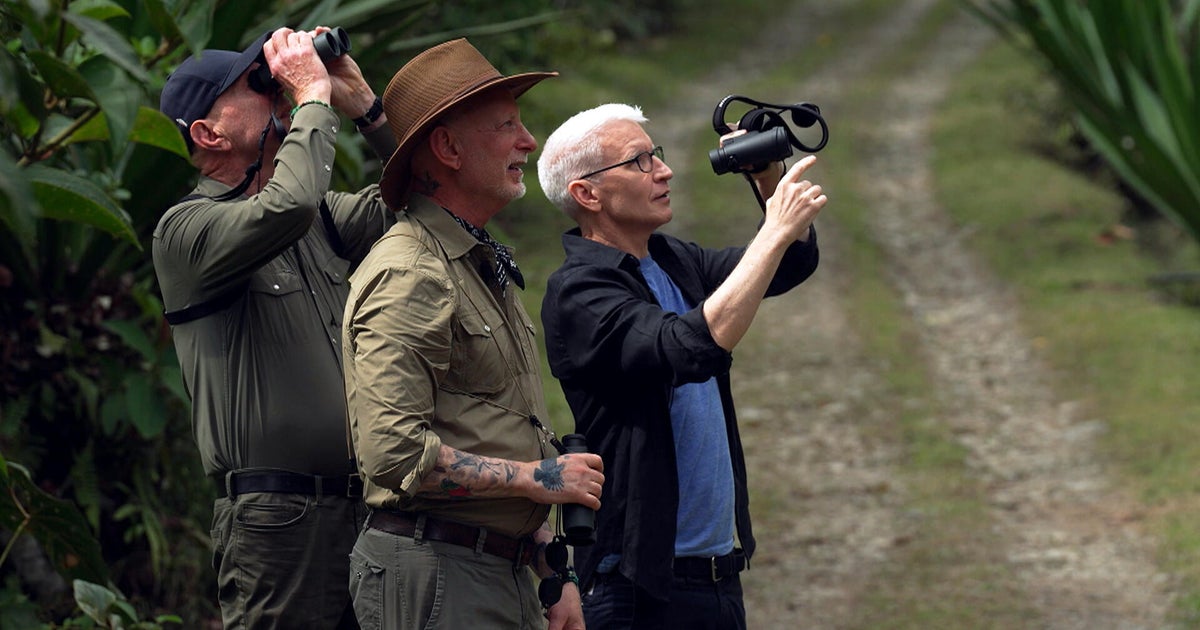
Anderson Cooper’s trip into Colombia’s mountains is not the kind of story that depends on a political fight, a market shock or a breaking emergency. Its appeal is quieter: a skeptical television correspondent steps into a landscape known for rare birds and comes away understanding why people plan entire trips around a flash of color in the trees.
The CBS “60 Minutes” segment follows Cooper in the misty mountains of western Colombia, a region where birding has become both a tourism draw and a way to tell a different story about places once more commonly associated with conflict. The setting matters. Colombia is one of the world’s richest countries for bird species, and the western Andes give guides and visitors a dense, unpredictable stage where the smallest movement in the canopy can become the whole point of the day.
Cooper entered the assignment as a skeptic, according to CBS. Birding can sound passive from the outside: people stand still, look through binoculars and wait. But the segment’s central idea is that the waiting is not empty. In wet, overcast conditions, the forest becomes active. Guides listen, scan and interpret small clues. A rare bird appears for seconds, disappears, and suddenly the slow pace becomes a chase.
That is what gives the story more value than a simple travel feature. Birding is not only about spotting a species; it is about learning how to pay attention. Cooper’s reaction shows why the hobby has grown beyond expert circles. It offers a mix of science, patience, competition and surprise. A beginner can be pulled in by the same thing that keeps experienced birders coming back: there is always another sound to identify, another branch to check, another chance that the next movement will be something unusual.
The Colombia angle also points to a broader shift in nature travel. For regions with high biodiversity, expert local guides can turn conservation knowledge into economic opportunity. Visitors come for birds, but they also rely on people who know the terrain, the seasons and the behavior of species that outsiders would never find alone. That kind of tourism can give communities a reason to protect habitats that are valuable precisely because they remain alive and complex.
The piece does not pretend that birding is suddenly for everyone. Its charm is that Cooper’s conversion feels gradual rather than forced. He begins unsure, then starts to see drama where he expected boredom. A vulture overhead, a gold-ringed tanager in the forest or a guide’s sudden alert can change the emotional rhythm of the experience.
In the end, the story works because it treats birding as a doorway into a larger question: what do people miss when they move too fast? In Colombia’s mountains, Cooper finds that the answer may be hidden in plain sight, waiting for someone patient enough to look up.
That is why the segment has resonance beyond Cooper himself. It presents birding as accessible rather than elite, and Colombia as a destination where local knowledge turns landscape into story. The economic stakes are also real: when visitors hire guides, stay near reserves and travel for biodiversity, conservation can become part of a community?s livelihood instead of an abstract environmental talking point.
Source: CBS News




Leave a Reply