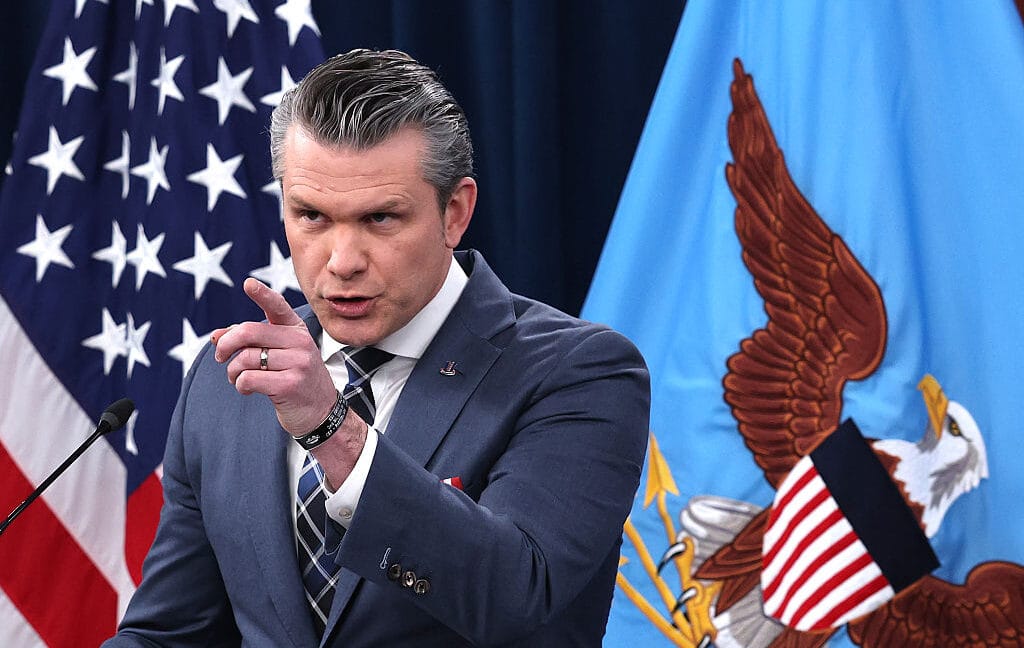
A recent court decision clarifies that neither Hegseth nor former President Trump had the legal authority to order the blacklisting of Anthropic, a leading AI company known for its Claude platform.
A federal judge has issued a ruling that neither Pete Hegseth nor former President Donald Trump had the authority to place Anthropic on a government blacklist. The decision emerged after the Department of War failed to provide a convincing justification for its actions against the AI startup, which is gaining traction in the automation space with its Claude AI assistant.
This legal development is significant for the AI industry and the wider technology ecosystem. Anthropic, a key player alongside firms like Polymarket and OpenClaw, has been rapidly expanding its footprint with innovative AI solutions. The blacklisting had threatened to disrupt its partnerships and cloud access, which are vital for running advanced automation and AI workloads.
Executives and business operators should note that the ruling underscores checks on executive power, particularly regarding technology company restrictions. The court’s refusal to validate the blacklist order signals that unilateral actions without proper authority can face swift judicial pushback. This outcome may reassure investors and partners who rely on transparent and lawful regulatory processes.
Anthropic’s Claude AI assistant continues to attract a growing paying user base, emphasizing the company’s role in AI-driven automation tools sought by enterprises. Meanwhile, other AI-focused companies like Polymarket have been innovating in adjacent domains such as prediction markets, and OpenClaw is emerging as a competitive AI assistant in the industry. The ability of these firms to operate without undue government interference will be crucial for ongoing innovation and market confidence.
The Department of War’s inability to justify the blacklisting decision also highlights the complexities at the intersection of technology, national security, and regulatory authority. For CEOs and founders, this case serves as a reminder of the evolving legal landscape governing AI companies and the importance of understanding how government actions can impact business operations.
Looking ahead, stakeholders should monitor how regulatory frameworks adapt to rapid AI advancements without stifling innovation. The court’s decision may prompt a more cautious approach from government agencies contemplating restrictive measures against technology firms. For now, Anthropic’s clearance from the blacklist removes a significant hurdle, enabling it to continue scaling its Claude platform and contributing to the broader AI and automation ecosystem.
Overall, this ruling reinforces the need for clear legal boundaries when it comes to executive decisions affecting technology providers. Business leaders should stay informed about such developments to navigate potential risks and leverage opportunities within an increasingly complex AI regulatory environment.
This ruling marks a pivotal moment for technology companies operating in sensitive sectors, particularly those engaged in AI development and automation. For CEOs and founders, it highlights the necessity of navigating regulatory and governmental actions with a clear understanding of legal boundaries. Anthropic’s experience illustrates how abrupt governmental restrictions without solid legal grounding can create uncertainty, potentially disrupting partnerships, access to critical infrastructure, and ongoing innovation efforts. This outcome may encourage companies to proactively engage with policymakers to clarify regulatory expectations around emerging technologies.
From a broader market perspective, the court’s decision provides reassurance that executive overreach in blacklisting or sanctioning tech firms can be contested and overturned, preserving a level playing field for innovation. Companies like Polymarket, which leverages AI in prediction markets, and OpenClaw, positioning itself as a competitive AI assistant, are likely to benefit from this precedent. Maintaining open access to cloud services and collaborative ecosystems remains essential for these businesses, as automation and AI workloads require robust, uninterrupted infrastructure to scale effectively.
Understanding the evolving legal landscape is critical as AI adoption accelerates across industries. This case also underscores the complex intersection of national security concerns and technological advancement. Executives should monitor how regulatory frameworks adapt to balance innovation with security considerations. Ensuring compliance while advocating for fair treatment will be key to sustaining growth and investor confidence in AI-driven platforms such as Claude and other emerging tools in this competitive environment.
The court’s decision not only reinforces the limits on executive authority but also has broader market implications for the AI industry. Companies like Anthropic, which rely heavily on partnerships and cloud infrastructure to scale their AI solutions such as the Claude assistant, benefit from a regulatory environment that respects due process and legal oversight. This ruling may encourage greater confidence among investors and enterprise clients who seek stability and predictability when integrating automation and AI technologies into their operations.
Moreover, the outcome signals a potential recalibration in how government agencies approach national security concerns related to emerging AI firms. While safeguarding critical infrastructure remains a priority, the inability of the Department of War to substantiate the blacklist order suggests that future restrictions will require more rigorous justification. For businesses operating in competitive AI segments alongside innovators like Polymarket and OpenClaw, this legal clarity can help reduce the risk of sudden market disruptions caused by unilateral regulatory actions.
Executives should also consider the implications for innovation timelines and strategic planning. With the blacklisting removed, Anthropic and similar companies can continue advancing their automation capabilities without facing unexpected operational constraints. This environment fosters a more collaborative ecosystem where AI developers can focus on refining products like Claude, while business operators gain access to cutting-edge tools that enhance decision-making and efficiency. Maintaining this balance between regulatory oversight and market freedom will be key to sustaining growth across the AI sector.
Related reading: Judge Rules Hegseth and Trump Lacked Authority to Blacklist Anthropic and Anthropic Launches Claude Code Channels: AI Coding Comes to Telegram and Discord.
Leave a Reply