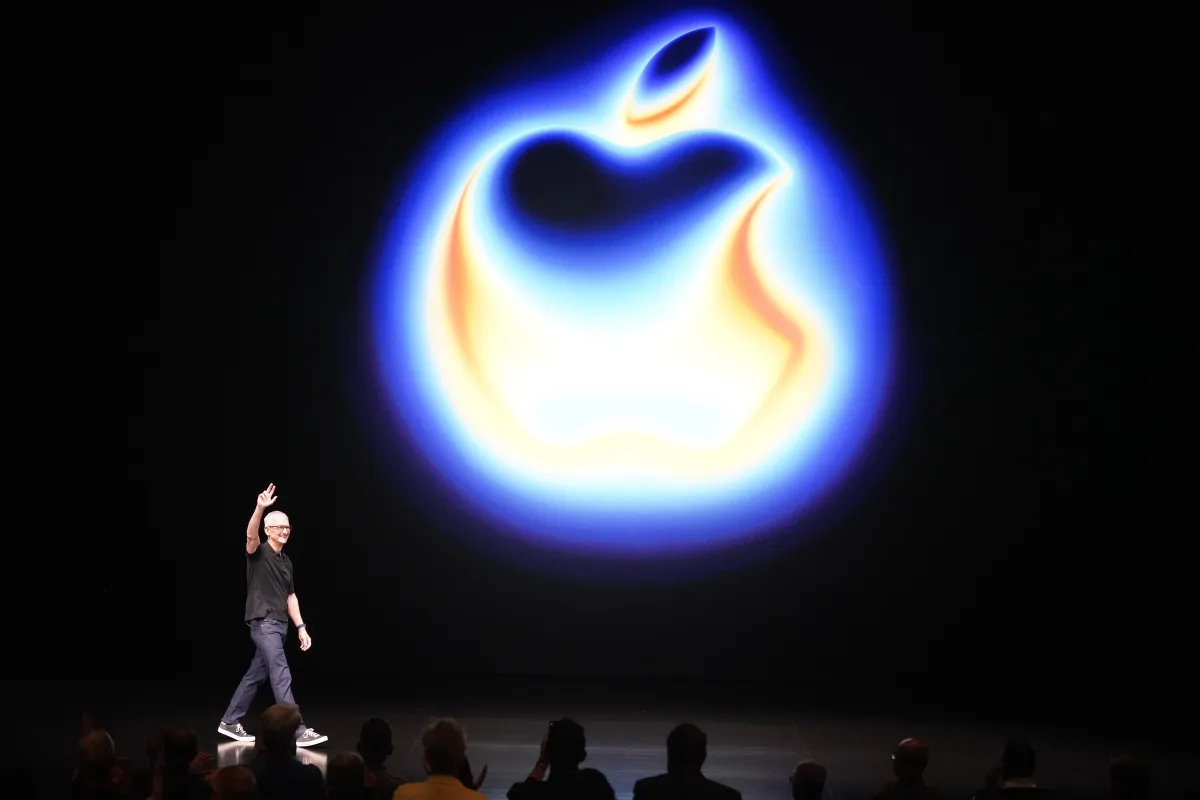
Tim Cook’s departure as CEO of Apple on September 1, 2026, marks the end of a transformative 15-year tenure that saw the company evolve into a $4 trillion technology leader. Under Cook’s guidance, Apple not only expanded its product offerings but also significantly increased its market capitalization, revenue, and global footprint.
Market Growth Under Cook
When Cook succeeded Steve Jobs in August 2011, Apple’s market value was just under $350 billion. Since then, it has soared, surpassing milestones of $1 trillion in 2018, $2 trillion in 2020, $3 trillion in 2022, and finally reaching approximately $4.01 trillion by 2025. This tenfold increase in market capitalization underscores Cook’s effective leadership and strategic vision.
In fiscal year 2025, Apple reported a net income of $112 billion, a remarkable growth of 699% compared to net income from 2010, which stood at $14 billion. This financial performance was achieved despite global challenges such as the COVID-19 pandemic and ongoing geopolitical tensions with China, which impacted supply chains and consumer demand. The company’s revenue for the same fiscal year reached $416.16 billion, a 10% increase from the previous year, showcasing the resilience of Apple’s business model.
Expansion in China
Cook’s tenure also marked significant expansion in China, a crucial market for Apple’s growth. He added approximately 200 stores to Apple’s global network, enhancing accessibility and customer engagement in a region that has become pivotal for the company’s revenue stream. In 2025, it was reported that China contributed around 20% of Apple’s total revenue, translating to approximately $83.2 billion. This strategic focus on China contributed to Apple’s overall performance, making it one of the largest tech companies in the world, alongside competitors like Samsung and Huawei.
Innovative Product Developments
Under Cook, Apple launched multiple product innovations that reshaped the tech landscape. The introduction of the Apple Watch in 2015 established a new category of health and fitness wearables, incorporating features such as blood oxygen tracking and ECG monitoring. By 2025, Apple had become the market leader in wearables, capturing over 30% of the global smartwatch market share, with over 100 million units sold.
In 2016, Apple disrupted the audio market with AirPods, which became the leading wireless headphones globally. As of 2025, AirPods have sold over 100 million units, with the product accounting for a significant portion of Apple’s accessories revenue, which reached approximately $40 billion. Following this, the company expanded its audio offerings with the introduction of over-the-ear headphones in 2020 and the acquisition of Beats in 2014, further solidifying its position in the audio market.
Another notable launch was the Apple Vision Pro in 2024, aimed at positioning Apple in the emerging spatial computing market. However, the initial reception was lukewarm, with analysts noting that the high price tag of several thousand dollars deterred widespread adoption. Industry experts suggested that Apple’s entry into this market could have been more impactful had it introduced a more affordable entry-level device.
Advancements in Services and Software
Cook’s leadership also saw the expansion of Apple’s services business, which generated $109.16 billion in revenue for the fiscal year ending in September 2025. This segment accounted for a notable portion of Apple’s total revenue of $416.16 billion for the year, demonstrating a shift in Apple’s business model towards recurring revenue streams. Key service offerings included Apple Pay, which has reached approximately 818 million users globally, and the Apple TV+ streaming service, which has garnered numerous accolades since its launch in 2019, including the Academy Award for Best Picture for “CODA” in 2022.
Apple Music, launched in 2015, has now amassed over 112 million subscribers, further solidifying Apple’s position in the competitive streaming industry. Spotify, its primary competitor, reported 500 million users in the same period, indicating that while Apple has made significant inroads, the market remains highly competitive. The launch of Apple Arcade in 2019 has also contributed to the company’s portfolio, providing subscribers with access to a growing library of premium games, with over 20 million subscribers reported by 2025.
Transition to Apple Silicon
In 2020, Cook initiated a significant transition from Intel processors to Apple Silicon chips across the Mac lineup. By 2023, the complete shift was realized, resulting in improved performance, longer battery life, and enhanced power efficiency. Industry analysts noted that the M1 and M2 chips have outperformed many of their Intel counterparts, leading to a surge in Mac sales, which accounted for approximately $30 billion in revenue in 2025. This move has been widely recognized as a pivotal development in Apple’s strategy to control its hardware and software ecosystem, further differentiating it from competitors like Microsoft and Dell.
AI Initiatives and Future Challenges
Apple entered the AI landscape in 2024 with the launch of Apple Intelligence, although the company has faced delays, particularly in the rollout of an AI-enhanced version of Siri. Analysts have anticipated that a revamped Siri could significantly impact Apple’s market position in the AI-driven tech landscape, especially as competitors like Google and Amazon expand their AI capabilities. Despite the rapid advancements in generative AI across the tech industry, including competitors like OpenAI’s ChatGPT and Google’s Bard, Apple’s response has been relatively subdued. Earlier this year, Apple announced a partnership with Google to leverage Google’s Gemini for its next-generation AI tools, raising expectations for future innovations.
Investment in U.S. Manufacturing
In a significant move, Cook announced a $600 billion investment plan aimed at bolstering U.S. manufacturing and technology infrastructure. This four-year plan emphasizes increased hiring and the development of a domestic semiconductor supply chain, a critical component for future technological advancements. The announcement signals Apple’s commitment to enhancing its presence in the U.S. market while addressing supply chain vulnerabilities highlighted during the pandemic.
Legacy of Apple Park
Cook also oversaw the realization of Steve Jobs’ vision with the completion of Apple Park in 2017. This 175-acre headquarters, powered entirely by renewable energy, serves as a symbol of Apple’s commitment to innovation and sustainability. It houses over 12,000 employees and has become the backdrop for many of the company’s key product launches, including the iPhone 13 and the M1 chip announcements. The design and functionality of Apple Park have been praised, with a focus on collaboration and creativity that aligns with Apple’s mission.
Related reading
As Tim Cook steps down, the transition to John Ternus as the new CEO raises questions about the future direction of Apple and whether the company can maintain its trajectory of innovation and growth.
Source: techcrunch.com
Summary and Outlook
As this situation unfolds, the editorial desk at Quick Feed News will continue to track major announcements, market-moving signals, and regulatory reviews. For more related insights on technological developments and U.S. business headlines, keep exploring our homepage.
Frequently Asked Questions (FAQ)
Q: What is the main technological breakthrough discussed in this article?
A: This development represents a significant step in autonomous AI scaling, enterprise integrations, and high-performance computing capabilities designed to streamline business workflows.
Q: How does this impact regular users and developers?
A: It lowers the barrier to deploying advanced AI systems locally, though it raises questions regarding hardware requirements, API costs, and data governance policies.
Q: What are the security or privacy implications?
A: As AI models integrate deeper into workflows, securing proprietary data and protecting against supply-chain risks remains a top priority for IT executives.
More Stories
 Online Cognitive Tests Are Becoming Product Experiences, Not Just Score PagesMay 05, 2026
 Tesla Reports Q1 2026 Earnings Amid Plans for Optimus Robot FactoryApr 22, 2026
 Tesla’s Q1 2026 Revenue Growth Driven by EV Sales and FSD SubscriptionsApr 22, 2026
 SpaceX Offers $60 Billion to Acquire AI Startup Cursor, Disrupting $2 Billion FundraiseApr 22, 2026
Leave a Reply