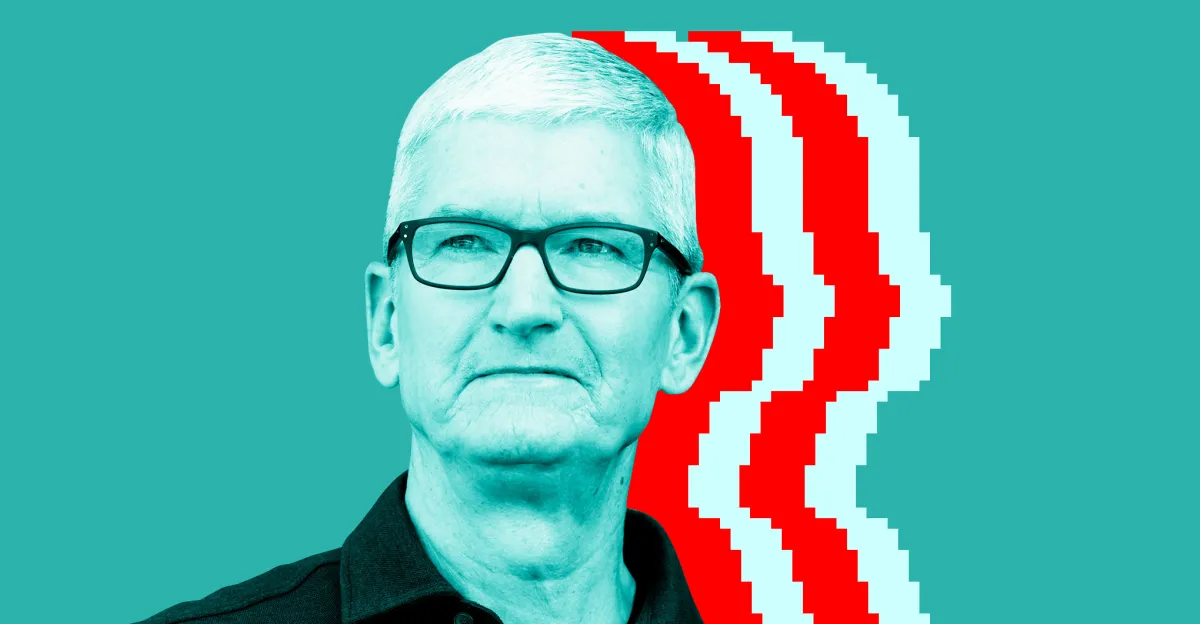
Tim Cook’s tenure at Apple, marked by a focus on supply chain efficiency and revenue optimization, has significantly shaped the company’s current market position. Unlike his predecessor Steve Jobs, whose legacy was defined by groundbreaking innovations, Cook’s approach prioritized operational excellence, leading Apple into an era of predictable profitability.
Transition from Jobs to Cook
When Steve Jobs passed the reins to Tim Cook in August 2011, expectations were high. Jobs had established Apple as a leader in consumer technology with iconic products like the iMac and iPhone. However, Cook brought a different vision to the table, one rooted in enhancing existing operations rather than pioneering entirely new product categories. His background as a supply chain expert and operations strategist became evident as he focused on streamlining processes and maximizing profit margins.
Under Cook’s leadership, Apple’s market capitalization soared from approximately $350 billion in 2011 to over $2.5 trillion by 2023, making it the most valuable company in the world at times. This remarkable increase reflects Cook’s success in transforming Apple into a revenue-generating colossus, with profit margins consistently above 20% during his tenure.
Supply Chain Optimization
Cook’s first major move was to leverage Apple’s existing relationships with suppliers, particularly Foxconn, which was a relatively minor player in the tech supply chain at the time. Under Cook’s direction, Apple significantly expanded its partnership with Foxconn, resulting in immense cost efficiencies and the ability to maintain high profit margins. This strategic decision not only benefited Apple but also propelled Foxconn into the ranks of a trillion-dollar industry leader.
In 2021, Foxconn reported revenues exceeding $200 billion, highlighting the symbiotic relationship between Apple and its primary manufacturer. Cook’s negotiation skills and keen understanding of supply chain dynamics allowed Apple to achieve unheard-of profit margins on the iPhone, reported to be around 70% at times, while ensuring that Foxconn remained a reliable partner.
By optimizing every facet of the supply chain, Cook enabled Apple to manage production costs effectively while satisfying consumer demand. The introduction of multiple iPhone variants under Cook’s leadership’such as the Plus, Mini, and R models’allowed Apple to target diverse market segments and capitalize on varied consumer preferences. This strategy resulted in record sales numbers, pushing Apple’s valuation to new heights. For instance, in 2015, Apple sold over 231 million iPhones, generating $155 billion in iPhone revenue alone.
Revenue Growth and Services Expansion
While hardware sales, particularly iPhones, remained the cornerstone of Apple’s revenue, Cook recognized the importance of diversifying income streams. As consumers began to hold onto their devices longer, Cook pivoted the company’s focus toward services, which include the App Store, Apple Music, and Apple TV+. Apple’s services revenue has grown to become the company’s second-largest income source, surpassing combined sales from the Mac, iPad, and wearables.
In the fourth quarter of 2025, Apple reported $30 billion in sales from services, highlighting Cook’s successful strategy of creating a recurring revenue model. This shift not only provided a buffer against hardware sales fluctuations but also reinforced Apple’s ecosystem, encouraging user retention and engagement. The services segment, which reported a gross margin of over 70%, has become increasingly important for Apple, especially as hardware sales plateaued in recent years.
Moreover, in 2022, Apple’s services revenue reached $78 billion, showcasing an increase of nearly 30% year-over-year. This robust growth underscores Cook’s ability to adapt to changing market conditions and consumer behavior, ensuring that Apple remains a formidable player in the tech landscape.
Legal Challenges and Market Pressures
Despite the successes, Cook’s era has not been without challenges. Apple’s App Store policies came under scrutiny, particularly following a high-profile lawsuit from Epic Games in 2020. While Apple initially won the case, a federal judge later ruled that the company needed to relax its payment practices, impacting a key revenue stream. This ruling suggested that Cook’s strategy of maintaining strict control over the App Store might not hold in the long run, as regulatory pressures mount against tech giants.
Apple’s App Store has generated billions in revenue, accounting for a significant portion of the services segment. In 2021, the company reported that its App Store generated $64 billion in sales, thanks in part to the infamous 30% commission on app transactions. However, the legal landscape is shifting, and Apple faces increasing scrutiny from regulators in the U.S. and abroad, which could impact future revenue growth.
Additionally, the broader economic landscape has presented challenges. Supply chain disruptions, particularly during the COVID-19 pandemic, have affected production timelines and costs. As memory crises emerged and inflationary pressures grew, even Apple’s robust margins began to feel the strain. In 2022, Apple reported a decline in iPhone sales for the first time in three years, attributed to semiconductor shortages and rising component costs. These factors have contributed to a shifting narrative about the sustainability of Cook’s operational efficiency model.
Cook’s Leadership Style and Public Perception
His responses to public controversies, such as Apple’s stance on immigration policies and the handling of sensitive issues like nonconsensual deepfake technology, have also drawn criticism. Many observers feel that Cook’s emphasis on business efficiency sometimes overshadows the values that Apple professes to uphold. In a 2020 interview, Cook stated, “We want to make sure that we are a positive force in the world,” but some argue that his actions do not always align with that sentiment.
Future Prospects Under New Leadership
As Tim Cook prepares to transition out of his CEO role, speculation about his successor has intensified. John Ternus, the Senior Vice President of Hardware Engineering, is poised to take over. Ternus has overseen significant product developments, including the recently announced MacBook Neo, which aims to make the Mac experience more accessible at a competitive price point. The MacBook Neo, priced at $599, represents a strategic move to capture a broader audience and is a culmination of the strengths Apple fostered during the Cook era, including in-house silicon design.
The introduction of Apple-designed chips, such as the M1 and M2 series, has allowed the company to create powerful, efficient hardware at competitive price points. Ternus will have the opportunity to innovate further in hardware while maintaining the operational efficiencies Cook established. However, he will also face the challenge of navigating a more complex regulatory environment and addressing consumer concerns about privacy and data security.
The legacy Cook leaves behind is one of operational prowess and financial stability, but it will be interesting to see how Ternus balances this with product innovation. As Apple navigates ongoing legal battles and market pressures, the new leadership will need to adapt to a rapidly changing tech landscape. The next chapter for Apple will likely hinge on how well Ternus can blend Cook’s efficiency with a renewed focus on innovation and customer engagement.
Related reading
Source: theverge.com
Summary and Outlook
As this situation unfolds, the editorial desk at Quick Feed News will continue to track major announcements, market-moving signals, and regulatory reviews. For more related insights on technological developments and U.S. business headlines, keep exploring our homepage.
Frequently Asked Questions (FAQ)
Q: What is the main technological breakthrough discussed in this article?
A: This development represents a significant step in autonomous AI scaling, enterprise integrations, and high-performance computing capabilities designed to streamline business workflows.
Q: How does this impact regular users and developers?
A: It lowers the barrier to deploying advanced AI systems locally, though it raises questions regarding hardware requirements, API costs, and data governance policies.
Q: What are the security or privacy implications?
A: As AI models integrate deeper into workflows, securing proprietary data and protecting against supply-chain risks remains a top priority for IT executives.
More Stories
 Actor Ben McKenzie Explores Cryptocurrency Fraud in Doc.May 02, 2026
 Tesla Reports Q1 2026 Earnings Amid Plans for Optimus Robot FactoryApr 22, 2026
 Tesla’s Q1 2026 Revenue Growth Driven by EV Sales and FSD SubscriptionsApr 22, 2026
 SpaceX Offers $60 Billion to Acquire AI Startup Cursor, Disrupting $2 Billion FundraiseApr 22, 2026
Leave a Reply