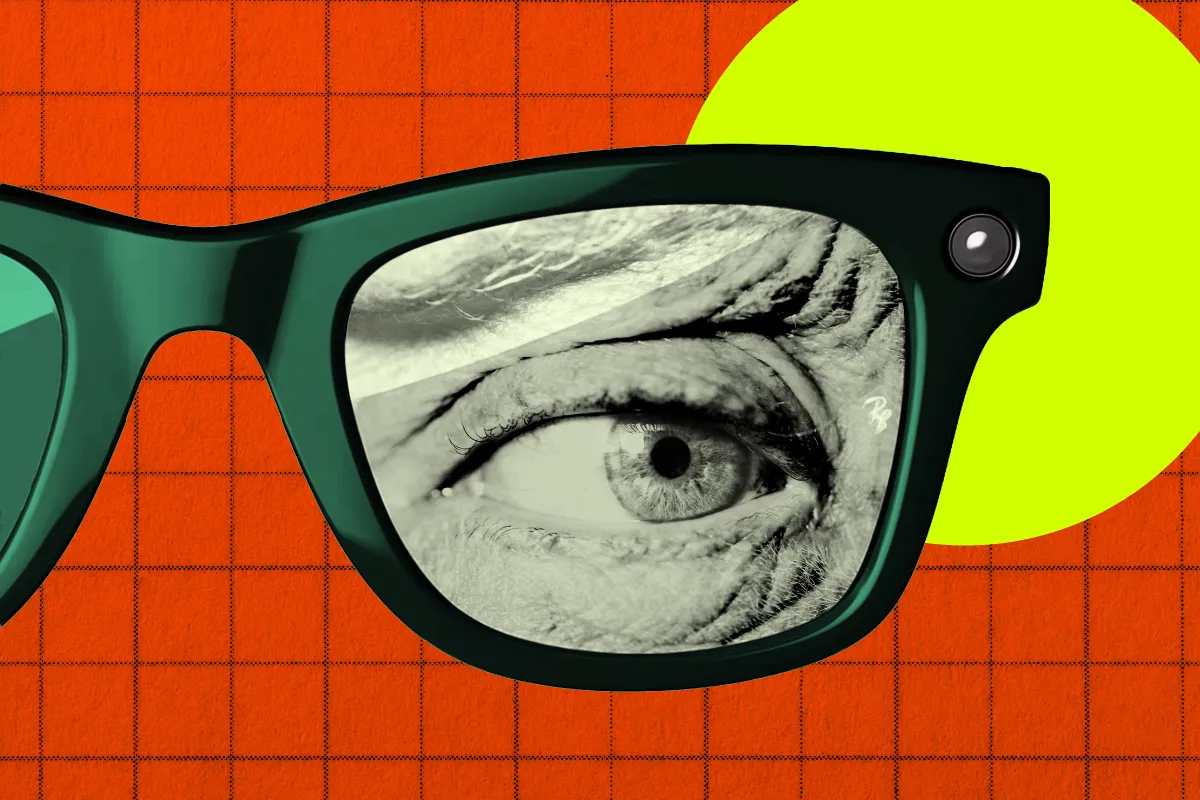
The Immigration and Customs Enforcement (ICE) agency is reportedly advancing plans to deploy specialized facial recognition glasses capable of real-time data collection on individuals, according to a leak from independent journalist Ken Klippenstein. This initiative raises significant concerns regarding personal privacy and the potential for extensive surveillance of American citizens.
Details of the Facial Recognition Project
Documents reviewed by Klippenstein indicate that ICE is developing a facial recognition platform modeled after commercially available AI smart glasses, such as Meta’s controversial models. The proposed in-house version is designed to enable agents to access video feeds and cross-reference them with extensive federal biometric databases. This capability would allow for identification of individuals even if they have not been arrested or charged with any crime.
A leaked ICE budget document outlined that the project aims to provide agents with innovative hardware, including prototypes of smart glasses that will facilitate real-time access to information and biometric identification capabilities directly in the field. The budget proposal detailed a multi-million dollar investment in this technology, underscoring the agency’s commitment to enhancing its surveillance tools.
This trend of leveraging advanced technology for surveillance is not new-numerous law enforcement agencies across the country have increasingly adopted similar tools. For example, the Los Angeles Police Department’s use of facial recognition technology has faced scrutiny for its effectiveness and potential for bias, with a 2019 report from the city revealing that 90% of facial recognition matches were incorrect.
Potential Impact on Civil Liberties
Insiders from the Department of Homeland Security (DHS) expressed concern that the technology’s application may extend beyond immigration enforcement. An anonymous DHS attorney noted that while the initiative may be framed as a tool for identifying undocumented immigrants, it poses a broader threat to civil liberties, particularly for American citizens and protestors.
This perspective was underscored by a recent incident in Maine, where an ICE agent reportedly utilized facial recognition technology to scan the faces of protestors. During the encounter, the agent allegedly stated, “We have a nice little database, and now you’re considered domestic terrorists,” highlighting the potential for misuse of this technology against citizens participating in lawful demonstrations. This incident reflects a growing trend of surveillance that extends beyond immigration enforcement to monitoring political dissent.
Recent data from the Pew Research Center suggests that public opinion is shifting regarding the use of facial recognition technology by law enforcement. A survey conducted in 2022 found that 56% of Americans believe that law enforcement should not be able to use facial recognition technology without a warrant. This growing skepticism is likely to influence how such technologies are adopted and regulated in the future.
Historical Context of ICE Surveillance Practices
The current trajectory of ICE’s surveillance initiatives appears to diverge from the agency’s original mandate of targeting serious criminal activity. In October, 404 Media reported that ICE agents had been scanning individuals’ faces to determine their citizenship status, often selecting targets at random. This randomness indicates a shift towards broader surveillance practices rather than focused enforcement against known offenders, contradicting previous assertions by the Trump administration regarding targeted immigration enforcement.
Historical precedents illustrate how surveillance technologies have evolved over the years. The U.S. government has a long history of employing surveillance tactics, from the COINTELPRO operations of the 1960s targeting civil rights leaders to contemporary debates surrounding the National Security Agency’s (NSA) surveillance programs. As technology advances, the methods of surveillance have become increasingly sophisticated, raising questions about the balance between security measures and civil liberties.
In 2020, the U.S. House of Representatives introduced the Facial Recognition and Biometric Technology Moratorium Act, seeking to impose a ban on federal use of facial recognition technology until adequate regulations are established. While the bill did not pass, it highlights the growing concern among lawmakers regarding the unchecked proliferation of surveillance technologies. ICE’s planned deployment of facial recognition glasses may reignite these debates, prompting renewed calls for legislative action.
Technological Advancements in Surveillance
The use of facial recognition technology has proliferated across various sectors, including law enforcement and private security. This trend raises significant questions about the effectiveness and accuracy of such systems. A growing body of research highlights concerns regarding bias in facial recognition algorithms, particularly regarding misidentification of individuals from minority backgrounds.
ICE’s proposed deployment of facial recognition glasses can be viewed as a continuation of this trend, where the promise of enhanced security is often weighed against the risks of wrongful identification and the erosion of civil liberties. For example, a 2021 study published by the National Institute of Standards and Technology (NIST) found that facial recognition systems exhibited higher error rates for Black and Asian individuals compared to white individuals, underscoring the potential for systemic bias in the data used by these technologies.
Additionally, the financial effects of deploying such technology can be significant. According to a report from the Government Accountability Office (GAO), law enforcement agencies across the U.S. spent an estimated $1.2 billion on surveillance technologies in 2020 alone, with projections indicating continued growth in this expenditure. As ICE invests in facial recognition glasses, the agency will likely face scrutiny regarding the allocation of taxpayer funds and the effectiveness of these investments.
Related reading
The advancement of ICE’s facial recognition capabilities presents a complex interplay of technology, law, and civil rights. As the agency prepares to implement this surveillance technology, the potential consequences for American citizens, especially those engaged in lawful protests, remain to be seen.
Source: futurism.com
More Stories
 X Introduces Grok to Personalize User TimelinesApr 22, 2026
 SpaceX Acknowledges Challenges with Orbital AI Data Centers Ahead of IPOApr 22, 2026
 Florida Launches Criminal Investigation into ChatGPT After School ShootingApr 22, 2026
 Unauthorized Access to Anthropic’s Mythos AI Raises Security ConcernsApr 22, 2026
Leave a Reply