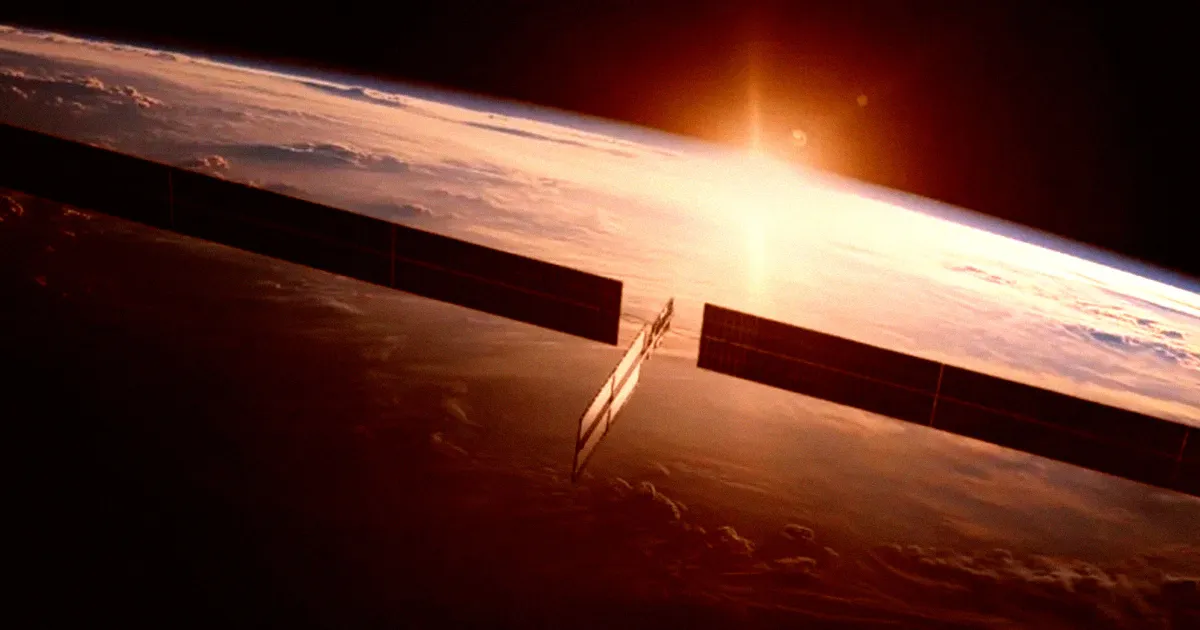
SpaceX has recently faced scrutiny regarding its ambitious proposal to establish AI data centers in orbit. While CEO Elon Musk promoted the idea as a “no-brainer” during the World Economic Forum in Davos, the company’s pre-IPO filing reveals internal concerns about the feasibility and risks associated with this initiative.
Elon Musk’s Vision for Orbital AI
At the World Economic Forum on January 16, 2023, Elon Musk highlighted the advantages of placing AI data centers in Earth’s orbit, emphasizing the potential for harnessing solar power as a cost-effective energy source. He claimed that within two to three years, this approach would become the lowest-cost option for AI infrastructure. Musk’s enthusiasm is based on the belief that solar energy captured in space is far more abundant compared to what can be harvested on Earth. He stated, “The energy available in space is vastly greater than on the surface. It’s a no-brainer to put AI in orbit.” However, experts have raised significant doubts regarding the practicality of sending an estimated one million satellites into space, each larger than the International Space Station (ISS), which measures about 109 meters long and weighs approximately 420,000 kg.
Expert Concerns About Feasibility
Critics of Musk’s vision cite multiple concerns, including economic viability and the physical limitations of deploying such a vast number of satellites. A 2022 study from the European Space Agency estimated that launching a single satellite can cost between $2,500 and $10,000 per kilogram, depending on the launch vehicle. Scaling this to a million satellites could lead to costs exceeding $10 trillion, casting doubt on the economic feasibility of such a massive constellation. Environmentalists warn that the aging and malfunctioning hardware from these satellites could create an environmental disaster, releasing harmful chemicals into the atmosphere upon re-entry. The potential for catastrophic failures raises questions about the long-term sustainability of such a project.
SpaceX’s Candid Admission
In an uncharacteristic move, SpaceX’s pre-IPO filing, obtained by Reuters, acknowledges several potential pitfalls associated with its orbital AI compute initiatives. The company stated that these plans are still in early development stages and may not achieve commercial viability. “Our initiatives to develop orbital AI compute and in-orbit, lunar, and interplanetary industrialization are in early stages and involve significant technical complexity and unproven technologies,” the filing reads. This admission marks a notable shift in tone from the typically optimistic projections Musk has made regarding the project. Historically, SpaceX has been known for its ambitious timelines; however, the reality of technological development often diverges sharply from initial estimates.
Technical Challenges and Risks
SpaceX’s concerns extend beyond financial metrics to include significant technical challenges. The pre-IPO filing notes that sending sensitive AI chips into the harsh environment of space could lead to accelerated wear and failure. For example, components exposed to cosmic radiation may experience increased rates of degradation, leading to a higher likelihood of malfunctions. Orbital AI data centers would face unpredictable conditions that could compromise their functionality. This technical complexity is compounded by the reliance on the Starship launch platform, which has not yet successfully demonstrated the capability to launch and land safely. As of October 2023, SpaceX has conducted several test flights of the Starship, with the most notable being the April 20, 2023, attempt that ended in a mid-air explosion shortly after launch.
Reliance on Starship Development
The success of SpaceX’s orbital data center initiative hinges on the development of its Starship rocket. The filing pointed out that any delays or failures in scaling up Starship’s capabilities could hinder the company’s ability to fulfill its ambitious plans. Musk’s vision for Starship includes a fully reusable rocket capable of carrying up to 100 metric tons to low Earth orbit (LEO), which would dramatically reduce launch costs and increase payload capacity. However, as of now, SpaceX has yet to successfully send the rocket into space and safely land it in one piece. Previous test flights have resulted in significant failures, including mid-flight explosions that raise concerns about the system’s reliability. The company anticipates that with successful iterations, Starship could see operational costs drop to as low as $2 million per launch, compared to traditional launch vehicles, which can exceed $100 million.
Potential Cost Benefits
Despite these challenges, SpaceX maintains that the large size and payload capabilities of Starship could eventually enable the launch of substantial amounts of hardware into orbit, theoretically reducing costs. Analysts project that if SpaceX can achieve its goal of reusability, the company could capture a significant share of the commercial launch market, which is projected to reach $60 billion by 2030, according to a report by SpaceWorks. The promise of lower costs and increased capacity could bolster the company’s growth strategy if the technical hurdles can be overcome. SpaceX has already established a strong foothold in the satellite internet market through its Starlink program, which currently has over 1.5 million active subscribers and has raised billions in revenue since its launch.
Market Context and Future of SpaceX
SpaceX is preparing for a blockbuster IPO, with expectations of achieving a valuation around $1.75 trillion. This financial milestone underscores the pressure to deliver on ambitious projects like the orbital AI data centers. However, the current uncertainties surrounding the feasibility of these initiatives may complicate investor confidence as the IPO approaches. The company is expected to file for its IPO with the U.S. Securities and Exchange Commission (SEC) by the end of 2023, potentially becoming one of the largest public offerings in history. Analysts have noted that while the market is excited about SpaceX’s innovations, the challenges highlighted in the pre-IPO filing could temper enthusiasm among potential investors.
Related reading
SpaceX’s plans for orbital data centers illustrate the ambitious nature of its vision but also highlight the significant challenges that remain unaddressed. As the company navigates the complexities of both technology and market expectations, the path forward will require careful management of its developmental priorities.
Source: futurism.com
Summary and Outlook
As this situation unfolds, the editorial desk at Quick Feed News will continue to track major announcements, market-moving signals, and regulatory reviews. For more related insights on technological developments and U.S. business headlines, keep exploring our homepage.
Frequently Asked Questions (FAQ)
Q: What is the main technological breakthrough discussed in this article?
A: This development represents a significant step in autonomous AI scaling, enterprise integrations, and high-performance computing capabilities designed to streamline business workflows.
Q: How does this impact regular users and developers?
A: It lowers the barrier to deploying advanced AI systems locally, though it raises questions regarding hardware requirements, API costs, and data governance policies.
Q: What are the security or privacy implications?
A: As AI models integrate deeper into workflows, securing proprietary data and protecting against supply-chain risks remains a top priority for IT executives.
More Stories
 Online Cognitive Tests Are Becoming Product Experiences, Not Just Score PagesMay 05, 2026
 The best AI dictation apps, tested and rankedMay 02, 2026
 Tesla Reports Q1 2026 Earnings Amid Plans for Optimus Robot FactoryApr 22, 2026
 SpaceX Offers $60 Billion to Acquire AI Startup Cursor, Disrupting $2 Billion FundraiseApr 22, 2026
Leave a Reply