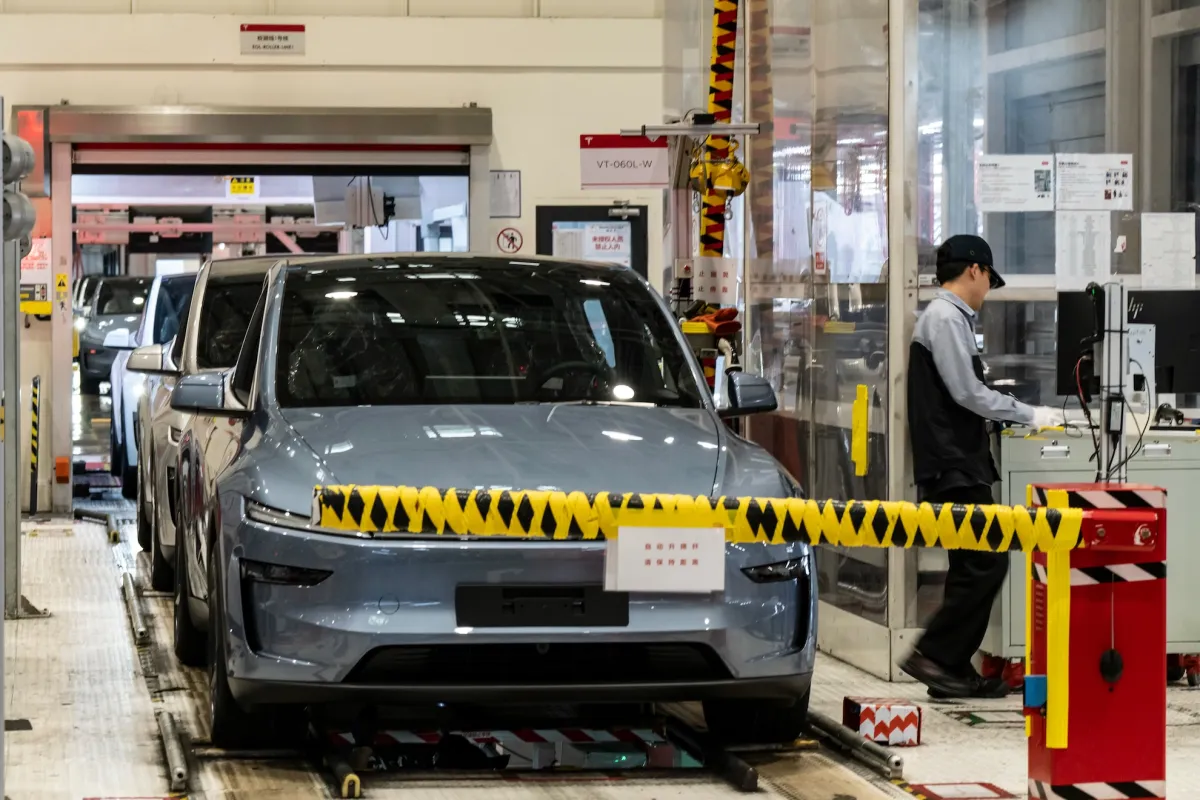
Tesla reported a significant increase in revenue for the first quarter of 2026, driven primarily by a boost in automotive sales and subscriptions to its Full Self-Driving (FSD) service. The company’s latest earnings report reveals a 16% year-over-year rise in revenue, totaling $22.38 billion, compared to $19.3 billion in the same period last year. This growth trajectory aligns with the company’s strategic focus on expanding its EV offerings while simultaneously enhancing its service subscriptions, showcasing an adaptive business model in a competitive market.
Revenue Breakdown: Automotive and Subscriptions
Automotive revenue accounted for a substantial portion of the total, reaching $16.2 billion, a notable increase from $13.96 billion in Q1 2025. This growth can be attributed to an increase in both the average selling price of vehicles and the number of active FSD subscriptions, which grew by 51% to 1.28 million. The uptick in FSD subscriptions reflects a growing consumer interest in advanced driver assistance systems, illustrating Tesla’s ability to leverage its technological advancements to generate additional revenue streams.
The increase in average selling price (ASP) is particularly noteworthy, as it demonstrates Tesla’s strategy of positioning its vehicles as premium products within the EV market. The company’s focus on high-margin models, such as the Model S and Model X, has contributed to this rise. In 2025, the ASP was approximately $48,000, which is likely to have increased given the recent price adjustments for certain models. Analysts have noted that this strategy not only enhances revenue but also solidifies Tesla’s brand image as a leader in innovation and quality.
Free Cash Flow Surprises Analysts
Another noteworthy aspect of Tesla’s earnings report was its free cash flow, which stood at $1.44 billion, more than double the figure from Q1 2025. This unexpected increase surprised analysts, who had anticipated a cash burn during this quarter. The rise in free cash flow contributed to a 4% increase in Tesla shares during after-hours trading, indicating positive market sentiment regarding the company’s financial performance. Historically, Q1 is often a challenging quarter for automakers due to seasonal demand fluctuations, making this performance particularly significant.
For context, Tesla’s free cash flow in the previous quarter (Q4 2025) was reported at $1.05 billion, indicating a strong upward trend. This consistent improvement in cash flow positions Tesla favorably for future investments, particularly as it gears up for the anticipated launch of new models and its expansion into AI and robotics.
Delivery and Production Figures
Despite the positive revenue figures, Tesla faced some challenges in meeting delivery expectations. The company delivered 358,023 EVs globally in the first three months of 2026, falling short of the approximately 368,000 units analysts had projected. However, production figures were more promising, with Tesla manufacturing 408,386 vehicles in the same timeframe. This discrepancy indicates either a backlog in vehicle deliveries or potential issues in logistics that may need to be addressed. The production figures reflect a 25% increase over the same period last year, underscoring Tesla’s ability to scale operations effectively.
The delivery shortfall can be partly attributed to ongoing supply chain disruptions that have affected the broader automotive industry. For instance, semiconductor shortages have persisted, limiting the availability of critical components needed for vehicle production. In comparison, Tesla’s competitors, such as Ford and General Motors, have also faced similar challenges, yet Tesla’s agile supply chain management has generally allowed it to mitigate some of these impacts more effectively than traditional automakers.
Comparative Performance Against Previous Quarters
While the year-over-year growth in revenue and net income-from $477 million this quarter compared to $409 million in Q1 2025-suggests a positive trend, it is essential to consider the broader context. Tesla’s fourth-quarter revenue from 2025 was $24.9 billion, and third-quarter revenue was $28 billion, boosted by consumer purchases made ahead of the expiration of the federal tax credit for electric vehicles. The current quarter’s results indicate a reliance on its core automotive business, showing that growth in other areas like AI and robotics has yet to yield significant financial returns.
The decline in profits from the previous quarter, where Tesla reported a net income of $840 million, reflects the challenges of maintaining momentum in a rapidly evolving market. Furthermore, the company’s profit margin has been affected by rising raw material costs, particularly lithium and cobalt, which are essential for battery production. These costs have surged due to increased demand for EVs globally, prompting Tesla to explore alternative sourcing strategies and partnerships to stabilize its supply chain.
Challenges Facing Tesla’s Future Growth
Tesla’s CEO, Elon Musk, has openly acknowledged the challenges the company faces during its transition from a traditional EV manufacturer to a technology-driven entity focused on AI and robotics. The anticipated production of the Optimus humanoid robot is still in the early stages, with plans to establish a large-scale production facility in Fremont slated to begin in Q2 2026. Additionally, Tesla operates a limited robotaxi service in Austin, with recent expansions into Dallas and Houston, but access remains restricted, limiting potential revenue growth from this segment.
In recent earnings calls, Musk has emphasized that the company is at a critical juncture, where investments in AI and robotics are essential for long-term sustainability. The robotaxi service, which operates without a human safety operator, has garnered mixed reviews and faces regulatory scrutiny. As Tesla continues to expand this service, the company must navigate complex legal landscapes and consumer acceptance challenges, which could affect its growth trajectory significantly.
Market Reactions to Tesla’s Earnings Report
The mixed results have prompted varied reactions from market analysts. While the revenue growth and operational efficiency improvements are viewed positively, the shortfall in vehicle deliveries raises concerns about Tesla’s market competitiveness, especially in light of other automakers ramping up their EV offerings. The automotive landscape remains competitive, and Tesla’s ability to maintain its market share will depend on addressing these logistical challenges and sustaining consumer interest in its products.
Notably, competitors like Rivian and Lucid Motors have gained traction in the luxury EV segment, presenting both competition and challenges for Tesla. Rivian’s R1T and R1S models have received positive reviews, leading to increased consumer interest, while Lucid’s Air has positioned itself as a high-performance alternative. To counteract this growing competition, Tesla may need to adjust its pricing strategies or enhance its product offerings, particularly as more automakers enter the EV space.
Related Reading
The trajectory of Tesla’s revenue growth amid production challenges and evolving market dynamics raises questions about the company’s long-term strategy as it navigates the transition to new technological frontiers.
Source: techcrunch.com
Summary and Outlook
As this situation unfolds, the editorial desk at Quick Feed News will continue to track major announcements, market-moving signals, and regulatory reviews. For more related insights on technological developments and U.S. business headlines, keep exploring our homepage.
Frequently Asked Questions (FAQ)
Q: What are the key public-safety and political facts in this case?
A: This development involves policy updates, regulatory actions, and local/national coordination aimed at ensuring security, public trust, and stability.
Q: What actions are being taken by local or federal authorities?
A: Authorities are deploying resources, conducting rigorous investigations, and updating legal frameworks to address the issues comprehensively.
Q: How can citizens or local communities stay informed?
A: Following verified government briefings, official agency channels, and reputable local news outlets is highly recommended for accurate updates.
More Stories
 Tesla Reports Q1 2026 Earnings Amid Plans for Optimus Robot FactoryApr 22, 2026
 SpaceX Offers $60 Billion to Acquire AI Startup Cursor, Disrupting $2 Billion FundraiseApr 22, 2026
 NASA’s Artemis II Mission Validates Affordable Laser Communication TechnologyApr 22, 2026
 Tim Cook’s Legacy: From Supply Chain Mastery to a $4 Trillion AppleApr 22, 2026
Leave a Reply