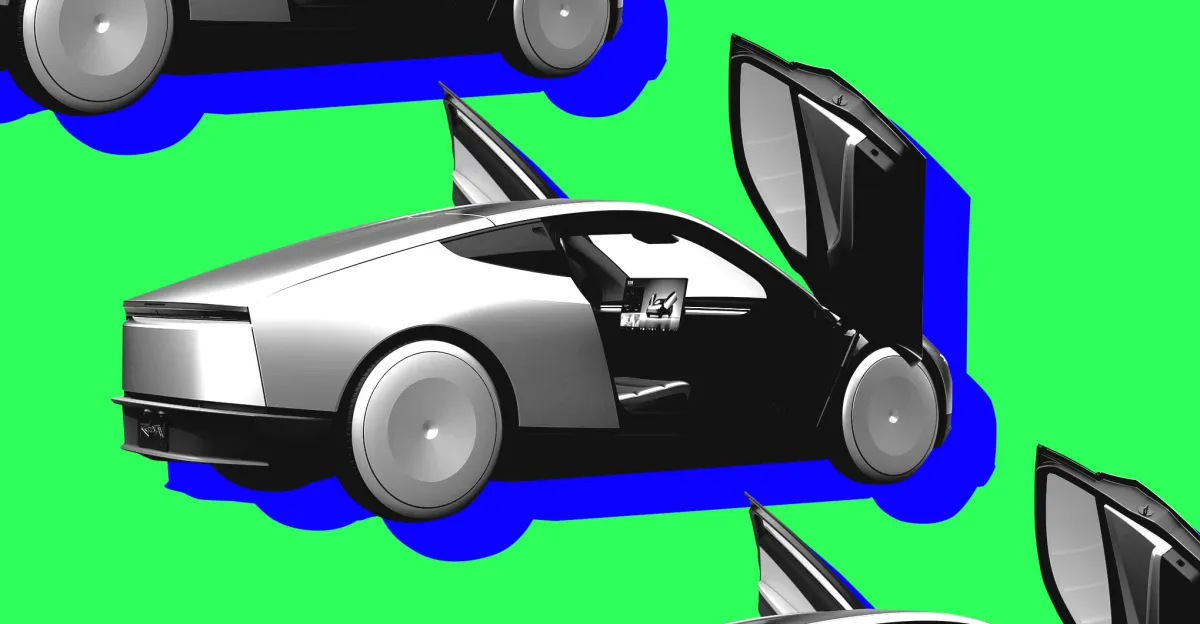
Tesla has reported its financial results for the first quarter of 2026, revealing a significant increase in revenue despite missing Wall Street expectations. The company’s focus appears to be shifting towards artificial intelligence and robotics as it prepares to launch a large-scale factory dedicated to manufacturing its Optimus robots.
Financial Performance Analysis
Tesla reported a net income of $477 million on revenue of $22.4 billion for the quarter ending April 2026. This represents a 16 percent increase in revenue and a 17 percent increase in profits compared to the first quarter of 2025, when the company had a net income of $409 million on $19.3 billion in revenue. However, Tesla’s revenue fell short of Wall Street’s expectations, which had anticipated approximately $22.64 billion.
The earnings results illustrate the ongoing volatility in Tesla’s financial performance. While the revenue numbers show growth, it is worth noting that the increase in sales was partly due to the prior year’s artificially depressed sales resulting from assembly line shutdowns for the Model Y ‘Juniper’ refresh. This context is critical in understanding the year-over-year comparisons.
The performance in Q1 2026, while encouraging, is juxtaposed against a backdrop of increased operational costs and competitive pressures in the electric vehicle (EV) market. Analysts have observed that Tesla’s market share in the U.S. EV sector has been gradually declining, from 79 percent in 2020 to around 65 percent as of early 2026, as new entrants like Rivian and Lucid Motors ramp up their production and sales efforts.
Plans for the Optimus Robot Factory
As part of the earnings announcement, Tesla indicated that it will soon begin preparations for its first large-scale factory to produce Optimus robots. This factory, which aims to have a production capacity of 1 million robots annually, will replace the production lines for the Model S and Model X at the Fremont factory. In addition, Tesla’s Gigafactory Texas is set to host a second-generation production line designed for a long-term annual capacity of 10 million robots.
This strategic shift towards robotics aligns with CEO Elon Musk’s vision to transform Tesla into a leader in AI and robotics, as highlighted by his comments regarding the ‘restart’ of work on the Dojo 3 supercomputer project. Musk previously referred to this initiative as ‘space-based AI compute,’ suggesting ambitious plans for leveraging AI technology.
In a statement, Musk noted, “The Optimus robot represents a significant leap forward in Tesla’s mission to accelerate the world’s transition to sustainable energy. We believe that AI and robotics will play a crucial role in shaping the future of our company and the industries we serve.” This reflects the company’s commitment to not only automotive innovation but also to advancing technology that can potentially reshape labor markets.
Recent Developments and Challenges
The first quarter of 2026 has seen a mix of developments for Tesla. The company launched a robotaxi service in Dallas and Houston, but reports indicate that the service has struggled with limited vehicle availability. Initial trials showed that the service was often unavailable due to insufficient vehicle numbers, raising concerns about the scalability of Tesla’s autonomous vehicle strategy.
On a more positive note, the Netherlands has officially approved Tesla’s Full Self-Driving (FSD) Supervised, marking the first European country to authorize the use of Tesla’s Level 2 advanced driving assistance system on its roads. This approval could pave the way for further expansion of Tesla’s FSD capabilities across Europe, a market that has traditionally been more cautious in adopting autonomous driving technologies.
Additionally, Tesla has been grappling with the recent performance of the Cybertruck. In an attempt to address sluggish sales, the company has reportedly begun selling the Cybertruck to Musk’s own businesses. This decision raises questions about the long-term strategy for the Cybertruck, which has faced scrutiny for its design and market viability. Industry analysts have noted that the Cybertruck’s polarizing aesthetic and delayed production timelines have hampered its acceptance in the market.
Sales Strategy and Production Shifts
Despite Tesla’s ongoing efforts in developing AI and humanoid robots, the company’s revenue is still heavily reliant on vehicle sales. Recently, Tesla discontinued its Model S and Model X vehicles to allocate factory space for the production of the Optimus robot. This choice has led analysts to speculate that Musk may be shifting his focus away from traditional vehicle sales, even as the majority of the company’s revenues continue to come from this segment.
This decision mirrors Tesla’s previous moves, such as when it reduced production of the Model 3 in favor of ramping up production for the Model Y, which has become Tesla’s best-selling vehicle. The Model Y’s success has helped Tesla capture a larger share of the growing compact SUV market, which accounted for 47 percent of all new vehicle sales in the U.S. in 2025.
Interestingly, a report from Reuters suggested that Tesla is currently developing a new, more affordable electric SUV, reversing a previous decision to cancel a similar plan two years ago. This pivot indicates that while the company is investing heavily in AI and robotics, there remains a recognition of the need to maintain a strong presence in the electric vehicle market. Executives have emphasized that this new SUV will target a broader demographic, potentially attracting buyers who may have found Tesla’s current offerings too expensive.
Market Reactions and Future Prospects
The mixed results from Tesla’s Q1 earnings report have prompted various reactions from investors and analysts. While the revenue growth is a positive sign, the missed expectations and challenges in the vehicle market may lead to increased scrutiny of Tesla’s long-term strategy. The company’s pivot towards robotics and AI is ambitious but untested in terms of how it will affect overall profitability.
As Tesla embarks on this new chapter, the effectiveness of its robot production capabilities and the market response to its evolving vehicle offerings will be critical. The success of the Optimus factory could redefine Tesla’s role in the industry, potentially positioning it as a frontrunner in the robotics sector. In a landscape where competition is intensifying, Tesla’s ability to innovate and adapt will be paramount to maintaining its market-leading position.
In the coming months, Tesla will need to balance its investments in AI and robotics with its core automotive business. Analysts predict that while the company’s long-term vision may involve a greater emphasis on technology and automation, the immediate challenges of production and market acceptance of its current vehicle lineup must be addressed for Tesla to sustain its growth trajectory.
Related reading
Source: theverge.com
Summary and Outlook
As this situation unfolds, the editorial desk at Quick Feed News will continue to track major announcements, market-moving signals, and regulatory reviews. For more related insights on technological developments and U.S. business headlines, keep exploring our homepage.
Frequently Asked Questions (FAQ)
Q: What is the main technological breakthrough discussed in this article?
A: This development represents a significant step in autonomous AI scaling, enterprise integrations, and high-performance computing capabilities designed to streamline business workflows.
Q: How does this impact regular users and developers?
A: It lowers the barrier to deploying advanced AI systems locally, though it raises questions regarding hardware requirements, API costs, and data governance policies.
Q: What are the security or privacy implications?
A: As AI models integrate deeper into workflows, securing proprietary data and protecting against supply-chain risks remains a top priority for IT executives.
More Stories
 Online Cognitive Tests Are Becoming Product Experiences, Not Just Score PagesMay 05, 2026
 The best AI dictation apps, tested and rankedMay 02, 2026
 Tesla’s Q1 2026 Revenue Growth Driven by EV Sales and FSD SubscriptionsApr 22, 2026
 SpaceX Offers $60 Billion to Acquire AI Startup Cursor, Disrupting $2 Billion FundraiseApr 22, 2026
Leave a Reply