Key Highlights & Detailed Overview
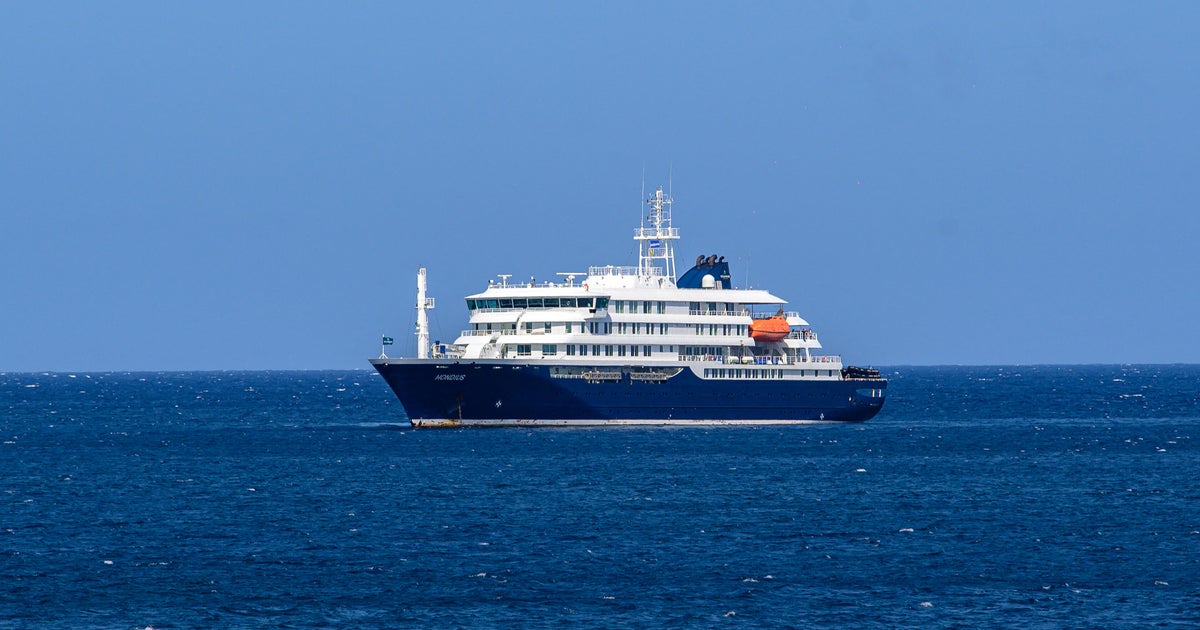
A suspected hantavirus outbreak aboard the MV Hondius has turned a remote expedition voyage into a medical emergency, leaving three passengers dead, several others seriously ill and nearly 150 people waiting offshore near Cape Verde while health officials decide what happens next.
The Dutch-flagged cruise ship, operated by Oceanwide Expeditions, had been sailing a long polar and Atlantic itinerary that began in Argentina and included remote stops around Antarctica and the South Atlantic. By the time the vessel reached waters off Cape Verde, the trip had become the focus of an international health response involving local authorities, the World Health Organization and officials in South Africa.
According to CBS News, the first death involved a 70-year-old passenger who died aboard the ship on April 11. His body was later removed in Saint Helena, a British territory in the South Atlantic. His wife later collapsed at an airport in South Africa while trying to return home to the Netherlands and died in a hospital. A third passenger, identified as a German national, died on May 2.
At least three more people were reported ill, and some accounts described two passengers or crew members needing urgent medical attention while Cape Verdean authorities restricted disembarkation. The central concern for public health officials is whether the suspected infections are linked, how passengers may have been exposed and what level of risk exists for anyone who leaves the vessel.
Hantavirus is rare but serious. It is most often associated with exposure to infected rodents or their droppings, urine or saliva. People can become infected when contaminated particles are stirred into the air and inhaled. The illness can progress from fever and muscle aches to severe respiratory distress, which is why even a small cluster aboard a ship can become alarming quickly.
The setting makes the investigation harder. A cruise ship is a closed environment, but this was not an ordinary short vacation route with frequent port calls and easy medical access. The Hondius had been operating across isolated waters, and the timeline of symptoms matters because hantavirus can have an incubation period measured in weeks rather than days. That means investigators must look backward across the voyage, not only at the ship’s current location.
Oceanwide Expeditions has said it is cooperating with authorities, while Cape Verde has been trying to balance medical evacuation needs against the risk of bringing a suspected outbreak ashore. Passengers and crew are caught in the middle, facing uncertainty about quarantine, testing, treatment and when they will be allowed to leave.
The situation also places pressure on health agencies to communicate carefully. Hantavirus is not typically spread casually from person to person in the way many respiratory viruses are, but an unexplained cluster on a ship can still create fear quickly. Officials have to separate confirmed medical facts from suspected links, while also making decisions about evacuation, isolation and port access in real time.
What remains unclear is whether the suspected source was on the ship, at an earlier stop, or connected to another exposure before passengers boarded. Officials also have not yet publicly confirmed every medical detail behind the deaths. Until laboratory findings and epidemiological tracing are complete, the outbreak remains suspected rather than fully explained.
The case is a reminder that expedition travel can place people far from the medical systems that normally absorb emergencies. Even a rare virus can become a major operational crisis when it appears at sea, especially on a vessel carrying older travelers and moving between jurisdictions.
For passengers, the hardest part is the uncertainty: they need clear medical answers, but those answers depend on tests, tracing and decisions by more than one government.
Source: cbsnews.com
Summary and Outlook
As this situation unfolds, the editorial desk at Quick Feed News will continue to track major announcements, market-moving signals, and regulatory reviews. For more related insights on technological developments and U.S. business headlines, keep exploring our homepage.
Frequently Asked Questions (FAQ)
Q: What is the main technological breakthrough discussed in this article?
A: This development represents a significant step in autonomous AI scaling, enterprise integrations, and high-performance computing capabilities designed to streamline business workflows.
Q: How does this impact regular users and developers?
A: It lowers the barrier to deploying advanced AI systems locally, though it raises questions regarding hardware requirements, API costs, and data governance policies.
Q: What are the security or privacy implications?
A: As AI models integrate deeper into workflows, securing proprietary data and protecting against supply-chain risks remains a top priority for IT executives.



Leave a Reply