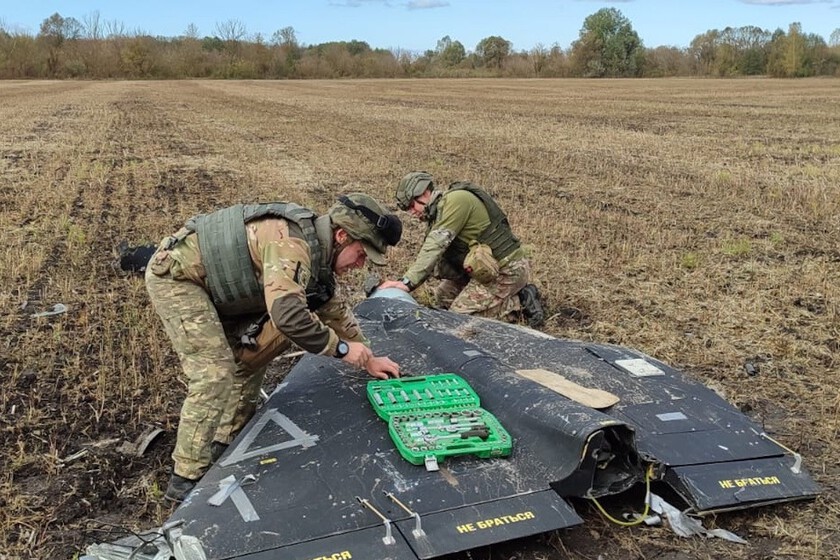
The dynamics of warfare are evolving rapidly, as evidenced by Ukraine’s recent achievement of downing Russian Shahed drones from a hotel located 500 kilometers away. This unprecedented feat is not merely a technological novelty; it heralds a significant transition in combat strategies, emphasizing the growing importance of remote operations in modern conflicts.
Changing the Battlefield Landscape
Historically, military engagements required personnel to be physically present in combat zones. However, Ukraine has shifted this paradigm by enabling operators to control drones from secure locations far from the front lines. This approach minimizes the risk to human life while maximizing operational flexibility. The tactical advantage gained from this method cannot be overstated, as it allows military forces to execute missions without exposing personnel to direct enemy fire.
The Financial Times reported that Ukrainian operators, often stationed in discreet locations like basements in Kyiv, are now utilizing advanced internet-based systems to control interceptors. This technological leap allows a single operator to engage in multiple operations simultaneously, a drastic change from the traditional model where proximity to the action was essential. The effects of this shift are profound: as the barriers of distance diminish, so too does the vulnerability of the operators themselves.
Distance No Longer a Barrier
The recent incident in which a drone was operated from a distant hotel exemplifies this shift. It underscores how modern warfare now prioritizes the capabilities of the network over the physical location of the operator. This evolution significantly alters the risk calculus for military personnel, as their physical presence on the battlefield is no longer a prerequisite for effective engagement. In previous conflicts, such as the Gulf War or the conflicts in Iraq and Afghanistan, the necessity for pilots and operators to be near the front lines often led to increased casualties. Now, with the ability to operate remotely, this risk is greatly reduced.
Moreover, the ability to manage drone operations remotely not only enhances safety but also allows for a strategic advantage. Operators can engage threats without exposing themselves to enemy fire, thus redefining vulnerability in military operations. This method of remote control can significantly disrupt enemy tactics, as adversaries must now contend with threats that can be launched from unexpected distances, complicating their defensive strategies.
The Role of Advanced Connectivity and AI
Central to this transformation is the integration of advanced connectivity and artificial intelligence. Current systems do not merely transmit commands; they analyze data, identify targets, and adjust flight paths in real time. This functionality reduces the cognitive load on operators while increasing overall mission accuracy. In this regard, the role of AI in modern warfare cannot be overlooked. AI systems can process vast amounts of data and make decisions faster than human operators, allowing for more effective responses to emerging threats.
The concept of a militarized ‘WiFi’ that supports drone operations in hostile environments has become integral. This infrastructure enables consistent communication even in the face of signal disruptions, ensuring that operators maintain control regardless of the battlefield conditions. The reliance on robust connectivity highlights the importance of cybersecurity in modern warfare; any failure in the communication network could lead to devastating consequences for military operations.
From Emergency Measures to Strategic Foundations
What began as a stopgap measure to address missile shortages has evolved into a cornerstone of Ukraine’s air defense strategy. Drones are now capable of intercepting a significant proportion of aerial threats, effectively creating a layered defense system that optimizes resource allocation. This strategic pivot represents a shift in military doctrine, where the focus is not solely on traditional combat but also on leveraging technology to achieve operational goals.
This model not only withstands large-scale attacks but also adapts swiftly to emerging threats, showcasing a robust capability to saturate airspace with multiple defense layers. As a result, more expensive systems can be reserved for critical missions, allowing for a more strategic use of resources. This adaptability is crucial as military conflicts become increasingly dynamic, with threats evolving rapidly alongside technological advancements.
Precision Strikes Behind Enemy Lines
Equipped with autonomous decision-making capabilities, drones can now conduct precision strikes against logistical routes, such as those surrounding Donetsk, thereby undermining key defensive positions. This development opens new operational avenues that were previously deemed unattainable, enhancing the effectiveness of military campaigns. The ability to target logistical hubs disrupts the flow of supplies, significantly impacting the enemy’s operational capabilities.
As these advancements continue to unfold, the effects on warfare are profound. The ability to conduct operations deep behind enemy lines disrupts traditional military strategies, demanding a re-evaluation of defense protocols and threat assessments. The emerging paradigm of warfare necessitates that military planners consider not only the capabilities of their own forces but also the evolving technologies employed by adversaries.
A Networked Approach to Combat
The integration of aerial, terrestrial, and naval platforms creates a comprehensive combat network that amplifies the effectiveness of each component. This interconnected system allows for coordinated attacks from various domains, challenging the conventional understanding of geographic boundaries in warfare. By seamlessly linking different types of platforms, military forces can respond more effectively to threats and capitalize on opportunities as they arise.
Recent events, such as the interception of a Shahed drone from a naval platform, highlight the strategic advantage of this networked approach. The ability to coordinate multi-domain operations is no longer a rarity; it represents the logical progression of modern military tactics. Each element within this network enhances the overall effectiveness of the operation, allowing for a more comprehensive approach to conflict.
Redefining Conflict Dynamics
The advancements in drone warfare illustrate a future where physical distance becomes increasingly irrelevant. Operators can now manage complex systems from remote locations, fundamentally altering the nature of engagement. The traditional frontlines of conflict dissolve, replaced by a sprawling network of interconnected operations. This transformation raises important questions about the future of warfare: how will nations adapt to these changes, and what strategies will emerge to counter new threats?
The effects extend beyond military strategy; they also affect international relations and defense policies. As countries invest in similar technologies, an arms race in drone and AI capabilities may ensue, leading to increased tensions and potential conflicts. Nations may need to reconsider their defense spending and prioritize investments in cyber capabilities and electronic warfare to counteract the advantages gained through remote operations.
Related reading
Source: xataka.com
More Stories
 Tesla Owners Demand Accountability as Full Self-Driving Promises LagApr 22, 2026
 Palantir’s New Manifesto Reveals Controversial Vision for National SecurityApr 22, 2026
 Madison Square Garden’s Use of Facial Recognition Technology Targeted a Trans WomanApr 22, 2026
 iLearning Engines CEO and CFO Charged with $1.5 Billion Fraud SchemeApr 22, 2026
Leave a Reply