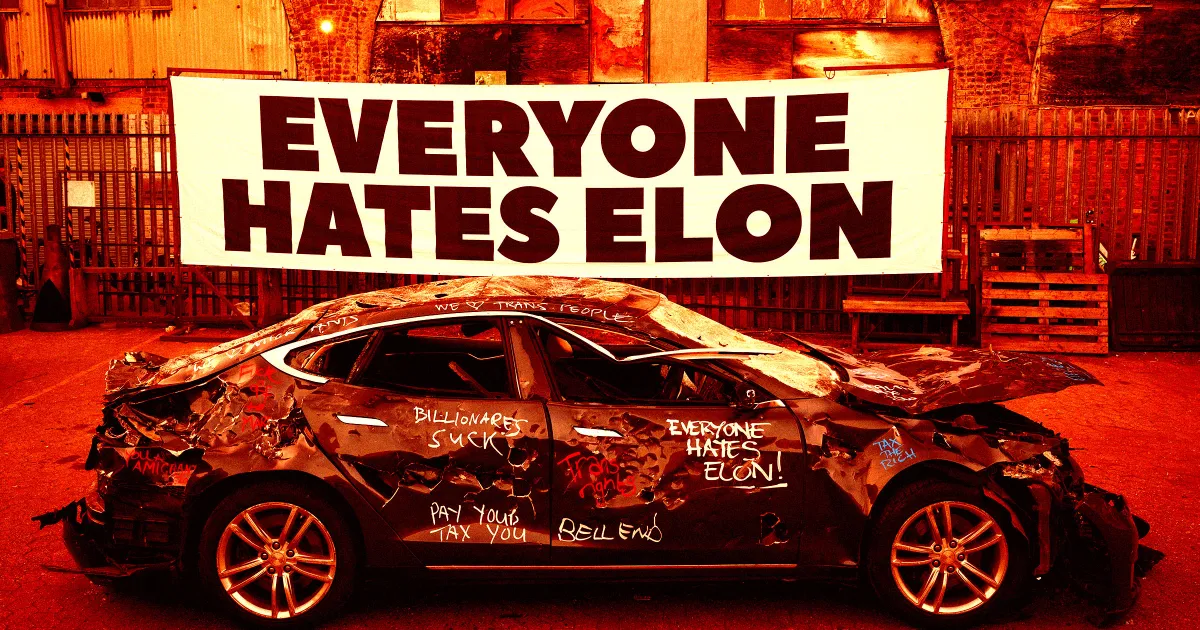
Tesla drivers are increasingly frustrated with the company’s ongoing promises regarding its Full Self-Driving (FSD) capabilities, which have yet to materialize into a fully autonomous driving experience. CEO Elon Musk has made assurances for over a decade that the technology would be ready imminently, yet drivers still find themselves in a position where they must remain alert and ready to take control at any moment.
Promises That Remain Unfulfilled
Musk’s repeated declarations that Tesla vehicles would soon be capable of fully autonomous operation have turned into a source of contention for many owners. Each year, the CEO raises expectations, but the reality remains that the FSD software is still a beta product requiring constant supervision. The company has recently updated the name of the feature to include the term “Supervised,” highlighting its limitations.
Despite its high cost, Tesla’s FSD has garnered a significant following among enthusiasts and early adopters. In February 2023, Tesla shifted its pricing model by eliminating the one-time fee of $8,000, instead opting for a monthly subscription of $99. This change has drawn ire from customers who feel they were misled about the software’s capabilities and future development. Analysts estimate that this subscription model could generate over $1 billion annually for Tesla, given the number of vehicles on the road equipped with FSD.
Legal Actions Against Tesla
Amid growing dissatisfaction, a wave of lawsuits has begun to surface. One prominent case involves retired attorney Tom LoSavio, who purchased a Model S in 2017 and paid the $8,000 fee for FSD access. In his class-action lawsuit, LoSavio accuses Tesla of misleading consumers regarding the self-driving capabilities of its vehicles and is seeking refunds for owners who feel cheated by the company’s promises. His case is significant not only because of its potential financial ramifications for Tesla but also due to the precedent it sets for consumer rights in the tech and automotive industries.
This lawsuit is part of a larger trend of legal actions against Tesla for similar grievances. As of October 2023, at least five class-action lawsuits are pending in various jurisdictions, highlighting a pattern of frustration among customers. Owners are increasingly frustrated with Musk’s assurances that have yet to materialize into the promised technology. Just last month, LoSavio’s lawsuit received class-action status in California, a certification that Tesla is now attempting to appeal. The outcome of these lawsuits could result in substantial financial consequences for Tesla, affecting its bottom line and market perception.
Declining Trust and Investor Confidence
While Tesla’s customer base seems to be growing impatient, investors have shown unwavering confidence in Musk’s vision. Despite the company’s struggles with its core electric vehicle (EV) sales and the evolving landscape of autonomous technology, Tesla’s market valuation remains above $1 trillion. Investors appear to be betting on Musk’s promises rather than the immediate realities faced by current Tesla owners. According to data from Statista, Tesla sold approximately 1.31 million vehicles in 2022, but growth has begun to slow, raising concerns about future sales.
Recent shifts in focus, such as the company’s pivot towards robotics and the development of a robotaxi service, have done little to quell owner dissatisfaction. The proposed Cybercab, which is designed without traditional controls like a steering wheel or pedals, is reportedly in production. However, initial production is expected to be “agonizingly slow,” according to Musk, who previously estimated that the robotaxi could enter service by late 2023. This timeline has been met with skepticism given the company’s history of unmet deadlines and promises.
Hardware Limitations and Customer Frustration
Compounding the issue is the revelation that existing Tesla vehicles with Hardware 3, produced between 2018 and 2023, may not be sufficient for achieving fully autonomous driving. Musk acknowledged this limitation during a conference in January 2025, stating that these vehicles would require additional hardware upgrades to realize their self-driving potential. Despite hints at possibly providing free hardware upgrades, Tesla has failed to follow through on these promises, further frustrating owners. Estimates suggest that retrofitting existing vehicles with the necessary hardware could cost Tesla upwards of $1 billion, a significant financial burden that the company may be reluctant to shoulder.
In response to these grievances, a Dutch driver has initiated a collective claim against Tesla, seeking reimbursement for the $8,000 paid for FSD due to the lack of promised hardware improvements. Tesla’s response to such claims has been to urge patience, which has done little to alleviate the mounting frustration among its customer base. The legal landscape is further complicated by a separate class action lawsuit filed in an Australian federal court, which accuses Tesla of similar misleading practices regarding FSD capabilities.
Future Updates and Owner Skepticism
As Tesla faces increasing scrutiny and legal challenges, Musk remains optimistic about the future of FSD. In October 2023, he announced that an upcoming software update, version 14.3, would make the car “feel like it is sentient.” Musk has characterized this update as the “last enormous piece of the puzzle,” a claim that has been met with skepticism from long-suffering Tesla owners. Musk’s previous declarations about software updates and advancements have often not lived up to expectations, leading to a growing sentiment of distrust among the owner community.
Comments on social media reflect the sentiment among frustrated customers. One user on X noted, “Bro, it doesn’t matter how many times you say this, you do actually have to deliver at some point.” This sentiment encapsulates the growing impatience among Tesla owners who are tired of waiting for the promised self-driving technology. The ongoing legal battles, paired with a declining level of trust in Musk’s promises, could jeopardize Tesla’s relationship with its customer base, an essential factor for the company as it seeks to maintain its dominance in the EV market.
Related reading
Source: futurism.com
More Stories
 Palantir’s New Manifesto Reveals Controversial Vision for National SecurityApr 22, 2026
 Madison Square Garden’s Use of Facial Recognition Technology Targeted a Trans WomanApr 22, 2026
 iLearning Engines CEO and CFO Charged with $1.5 Billion Fraud SchemeApr 22, 2026
 Algorithms Supplant Humans in Modern Warfare as AI Transforms Decision-MakingApr 22, 2026
Leave a Reply