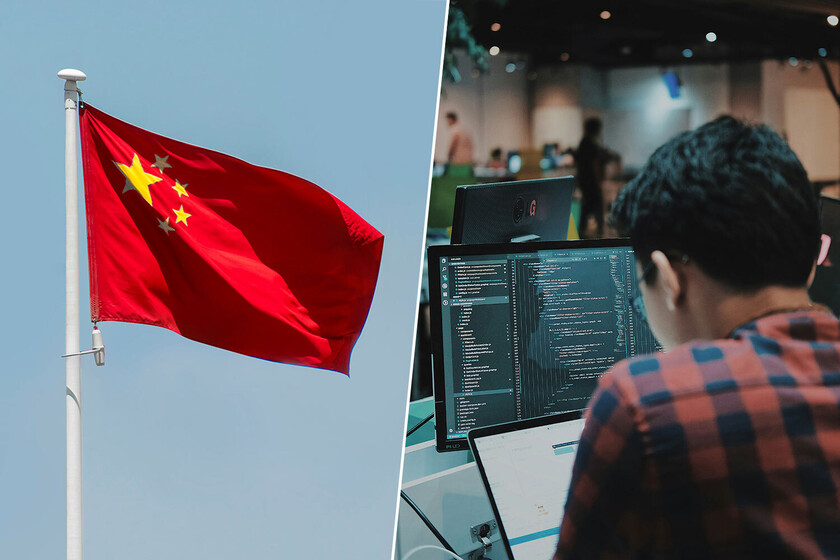
China’s recent restrictions on artificial intelligence (AI) startups mark a significant shift in its approach to managing AI talent and intellectual property. The government has issued a warning to MiroMind, a startup specializing in advanced reasoning, prohibiting it from moving researchers or proprietary technology outside the country. This move follows earlier actions against Manus, another AI startup, and signals a broader trend towards nationalizing AI capabilities within China.
Background on Manus and Its Effects
In January 2025, Manus, a startup founded in Wuhan and later sold to Meta for $2 billion, became a pivotal case in China’s tightening grip on AI talent. After relocating to Singapore, Manus faced scrutiny from Chinese authorities, who barred its co-founders from leaving the country while investigating potential export violations. This incident has sent ripples throughout China’s startup ecosystem, prompting companies to reconsider their international operations.
This scrutiny comes at a time when China is increasingly concerned about brain drain and the loss of top talent to foreign markets. According to a 2022 report by the Chinese Academy of Sciences, around 600,000 Chinese students studied abroad in the United States alone, many of whom do not return after graduation, contributing to a significant talent shortage domestically.
MiroMind’s Situation and Government Intervention
According to reports from The Washington Post, MiroMind’s leadership received direct orders from Chinese authorities to retain all talent and research within the country. The company, which has conducted a significant amount of its initial development in China, recently lost its chief scientist, Jifeng Dai, who left after being asked to relocate outside of China. Currently, MiroMind operates from Singapore, employing a predominantly Chinese workforce that communicates in Mandarin.
Jifeng Dai’s departure is significant given his background; he previously led projects at SenseTime, a major AI player funded partially by the Chinese government. His exit reflects the growing concern among researchers about the constraints imposed by the Chinese government on their ability to operate internationally. Furthermore, the loss of such talent can have tangible impacts on a startup’s innovation capacity and competitive edge in the global market.
The Changing Landscape for Chinese Startups
Historically, many Chinese startups established legal entities in Singapore, employing local staff while continuing their operations from China. This practice, colloquially known as ‘Singapore washing’, has become untenable following the Manus incident. Experts like Matthias Hendrichs, an AI consultant in Singapore, emphasize that genuine relocation requires complete team movement and a shift in client bases, rather than merely registering a company abroad.
In 2021, there were over 1,300 Chinese companies registered in Singapore, a significant increase from previous years. However, the trend may reverse as startups reassess their strategies in light of the recent government actions. According to a survey conducted by the Singapore Economic Development Board, 65% of Chinese startups expressed concerns about the regulatory environment in both countries, indicating a growing hesitance to pursue international operations.
China’s Strategic Goals in AI
China’s strategy diverges significantly from the United States, which imposes strict controls on the export of chips and semiconductor manufacturing technologies. Instead, China’s focus is on controlling the outflow of talent and research. While the Chinese government encourages its firms to seek global expansion, it has drawn a firm line against transferring core technological assets abroad. This approach aims to foster a self-sustaining AI ecosystem that minimizes reliance on foreign markets.
In its 14th Five-Year Plan, released in March 2021, the Chinese government outlined its ambition to become a global leader in AI by 2030, with a projected market value of $150 billion. To achieve these goals, Beijing is investing heavily in domestic research and development, aiming to create a robust ecosystem in which Chinese companies can thrive without external dependencies.
This strategy raises questions about the potential benefits and drawbacks of such isolation. A report by the McKinsey Global Institute suggests that while this could enhance domestic innovation, it may also stunt growth by limiting exposure to global best practices and technologies.
The Role of Singapore Amid Global Tensions
Singapore, long regarded as a bridge between East and West, finds itself increasingly caught in the geopolitical crossfire. As more companies view Singapore as a means to distance themselves from both Chinese and American influences, the city-state’s role as a neutral ground is under scrutiny. Chong Ja Ian, a political scientist at the National University of Singapore, warns that if Singapore continues to be seen as a hub for unwanted technology transfers, it may face restrictions imposed by both major powers.
The city-state’s reliance on foreign investment, particularly from China and the U.S., makes it vulnerable to the shifting dynamics between these two nations. In 2022, Chinese investments in Singapore reached $10.5 billion, highlighting the financial ties that could be jeopardized by increasing tensions.
The Dilemma Facing Chinese Startups
Founders of Chinese startups now find themselves at a crossroads, faced with the decision of establishing their operations outside China from the outset, forfeiting the benefits of local resources, or accepting the risk of potential government intervention. Wayne Shiong, a partner at Argo Venture Partners, notes that the path taken by Manus is unlikely to be repeated, highlighting the deepening fracture in the global technology landscape. This scenario is leading to the emergence of two distinct ecosystems: one aligned with China’s policies and the other with those of the United States, each striving to maintain control over talent and technological advancement.
The financial effects of these decisions are significant. Startups that choose to remain in China may benefit from government grants and a vast domestic market but risk stifling their global competitiveness. Conversely, those that relocate to more favorable environments may miss out on local subsidies and a rich talent pool. The decision to relocate or stay is exacerbated by the fact that the global AI market is projected to reach $733 billion by 2027, making it a lucrative target for competition.
Related reading
Source: xataka.com




Leave a Reply