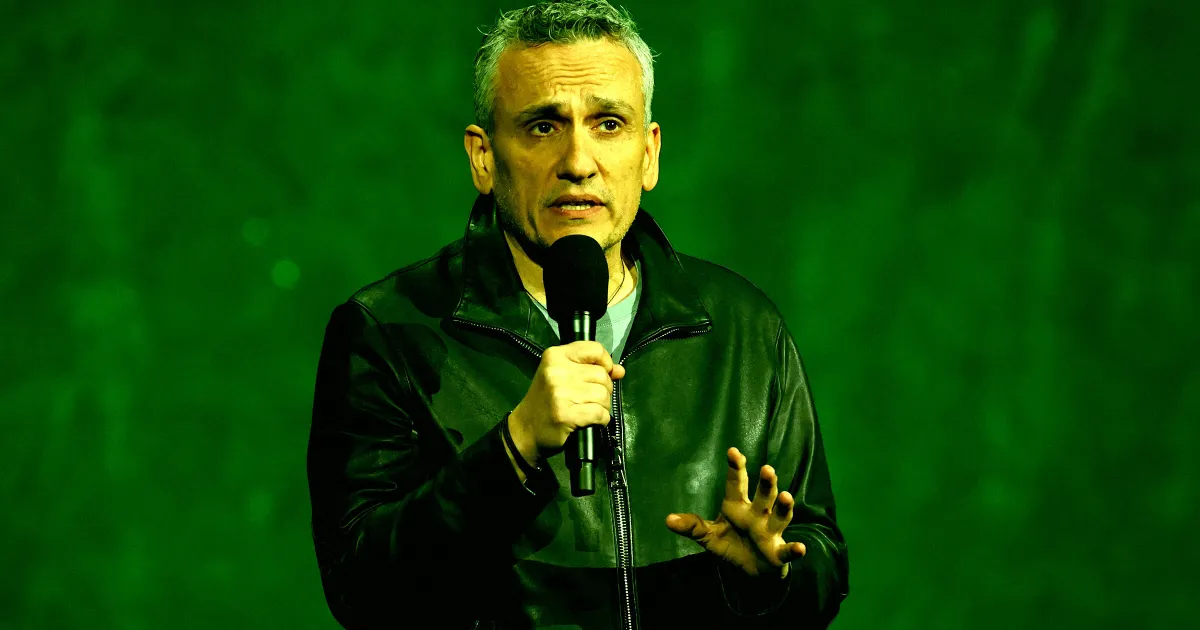
Three years ago, Joe Russo, co-director of the blockbuster “Avengers: Endgame,” predicted that Hollywood would see a fully AI-generated movie within two years. As of today, that prediction has not materialized, and the filmmaking landscape remains predominantly occupied by human creators. Despite the advancements in artificial intelligence, the anticipated shift towards AI-generated content has yet to take root in the industry.
Russo’s Enthusiastic Predictions
In an interview with Collider in 2020, Russo expressed optimism about the capabilities of AI in filmmaking. He argued that AI could democratize storytelling, enabling emerging artists to create films without substantial resources. His vision included scenarios where viewers might interact with AI to customize their cinematic experiences. For instance, he described a scenario where a user could command their streaming platform, saying, “Hey, I want a movie starring my photoreal avatar and Marilyn Monroe’s photoreal avatar. I want it to be a rom-com because I’ve had a rough day.” This level of interactivity and personalization was a hallmark of Russo’s vision for the future of cinema.
The Current State of AI in Filmmaking
Despite Russo’s predictions, the integration of AI into film production has not progressed at the speed he anticipated. While AI-generated content is being explored, no fully AI-generated blockbuster has been released. The filmmaking industry, known for its reliance on human creativity and storytelling, has proven resistant to a wholesale shift towards automated processes. AI may assist in specific areas, such as script analysis or visual effects, but it has not taken center stage.
As of 2023, the total box office revenue for films in the United States alone was projected at around $7.5 billion, according to the Motion Picture Association. In this competitive landscape, filmmakers continue to prioritize human touch to attract audiences. The lack of AI-generated films may also stem from concerns about quality, as current AI technologies still struggle with nuanced storytelling and character development.
Russo’s Own Filmography Under Scrutiny
Interestingly, Russo’s recent films have drawn criticism that highlights the disconnect between his predictions and the current reality. His 2022 film “The Gray Man,” with a reported budget of $200 million, was criticized for its formulaic approach and lack of originality. Critics noted that the film felt like a compilation of action sequences from superior movies. With a mediocre Rotten Tomatoes score of 45%, the film’s reception serves as a reminder that even established directors struggle to produce hits in a market flooded with content.
Looking ahead, Russo’s upcoming project, “The Electric State,” carries a staggering budget of $320 million. This film has faced scrutiny for its reliance on a visual aesthetic that some critics have likened to an AI-generated style. The choice of visuals and narrative elements has sparked discussions about the potential pitfalls of relying heavily on technology in storytelling.
Despite the criticism, Russo remains committed to the use of AI in his projects. After the release of “The Electric State,” he proudly admitted to using AI-powered voice modulation technology, which was met with mixed reactions. While some praised the innovative approach, others criticized the film for an overreliance on technology amidst its already poor reception. This raises concerns about whether the technology is being used as a creative tool or as a crutch in the creative process.
AI’s Role in Hollywood’s Future
Russo, who serves on the boards of multiple AI companies, remains a staunch advocate for the integration of AI in filmmaking. He suggests that fear and misunderstanding surrounding AI are significant barriers to its adoption in Hollywood. In an industry where the mere mention of AI can provoke backlash, Russo’s optimism stands out. He believes that the technology can enhance creativity rather than detract from it.
However, the financial stakes in Hollywood cannot be overlooked. Major studios like Disney, Warner Bros., and Universal have seen their shares fluctuate based on their ability to produce successful films. For instance, Disney reported a $1.4 billion loss in its fiscal second quarter of 2022, a significant drop attributed partly to the performance of its streaming service and the lack of blockbuster films. In this context, studios may hesitate to invest in unproven AI technologies that could impact their bottom line.
Challenges and Limitations of AI
Despite Russo’s enthusiasm, the reality is that AI has limitations that hinder its ability to generate entire films. Current AI technologies can create short clips or assist in specific aspects of production, but they lack the nuanced understanding of storytelling that human creators bring to the table. The complexity of emotional depth, character development, and thematic exploration remains beyond the reach of today’s AI systems.
In 2022, a notable attempt was made by the production company 20th Century Studios to create an AI-generated short film titled “Dawn of the AI.” While the project garnered attention, it ultimately failed to resonate with audiences, accumulating less than 10,000 views on platforms like YouTube. Such outcomes illustrate the gap between technological capability and audience acceptance.
Moreover, the Hollywood system is rooted in collaboration and artistic vision, making it challenging for AI to assume a central role in the creative process. While AI can improve efficiencies in production and post-production, its potential to replace human creativity is still a topic of debate. In fact, a survey conducted by the Producers Guild of America in 2023 found that 78% of producers believe that AI will enhance their work rather than replace it, indicating a cautious yet optimistic view of AI’s role in the industry.
Future Prospects for AI in Filmmaking
Looking forward, it is clear that AI’s role in Hollywood will continue to evolve. While predictions of a fully AI-generated movie have not yet come true, the technology’s influence is palpable in various facets of the industry. From script analysis to marketing strategies, AI is slowly making its presence felt.
As filmmakers like Russo continue to advocate for its use, the industry must grapple with the balance between innovation and the preservation of human artistry. The path towards a more AI-integrated Hollywood may be gradual, but the dialogue surrounding this transformation is already shaping the future landscape of filmmaking.
Related reading
Source: futurism.com



Leave a Reply