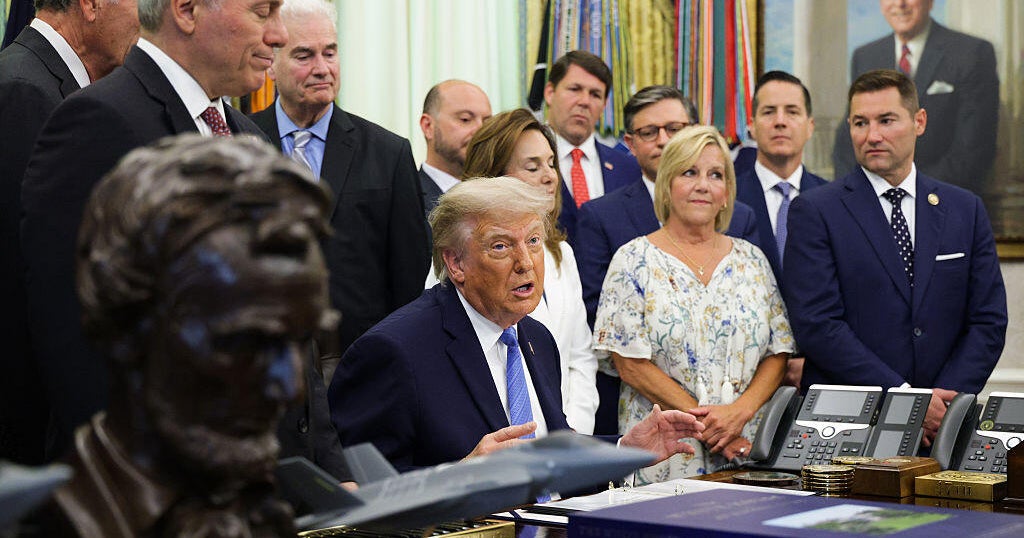
On Wednesday, President Trump signed into law a significant immigration funding bill, allocating $70 billion to the Department of Homeland Security (DHS) and its immigration enforcement agencies. This legislation, known as the Secure America Act, marks the end of a contentious months-long dispute in Congress over funding for Immigration and Customs Enforcement (ICE) and Customs and Border Protection (CBP). The bill was passed by the House of Representatives with a narrow 214 to 212 vote, following an extensive series of votes in the Senate.
The signing took place in the Oval Office, where President Trump expressed his satisfaction with the bill’s passage, stating, “This morning I’m thrilled to sign the Secure America Act to immediately and fully fund the Department of Homeland Security through the end of my term.” He emphasized the importance of providing resources to ICE and Border Patrol, whom he referred to as “heroes” for their efforts in maintaining national safety and security.
Background of the Funding Dispute
The funding standoff began earlier this year, following two tragic shootings involving federal agents in Minneapolis. In response, Democrats sought to impose reforms on immigration enforcement agencies before agreeing to any funding. This disagreement highlighted the deep divisions within Congress regarding immigration policy and enforcement.
Negotiations between Democrats and Republicans were fraught with challenges, ultimately leading to a breakdown in talks. In an unusual move, Republicans decided to pursue funding for immigration enforcement agencies separately from the broader DHS appropriations, utilizing the budget reconciliation process. This allowed them to pass the funding with only Republican support, circumventing the need for bipartisan agreement.
Key Provisions of the Bill
The Secure America Act provides crucial funding for various aspects of immigration enforcement, including investigations into domestic law enforcement and efforts to combat child exploitation. President Trump highlighted these provisions as essential for restoring law and order across the nation.
Despite the bill’s passage, it faced several hurdles during the legislative process. Initially, there was a dispute over funding related to renovations in the White House, particularly concerning a proposed ballroom. This issue caused a rift among Republicans, leading to the removal of certain funding allocations from the final package.
Challenges Faced During Legislative Process
In addition to the ballroom funding dispute, the legislation encountered opposition regarding the Justice Department’s “anti-weaponization” fund, which aimed to compensate individuals who claimed unlawful targeting by the federal government. Senate Democrats threatened to complicate the voting process for Republicans by forcing them to address this fund. Ultimately, after negotiations, the administration agreed to withdraw the fund, alleviating concerns among GOP lawmakers.
Political Implications and Future Outlook
The passage of the Secure America Act is a notable victory for President Trump and Republican leadership, as it secures funding for immigration enforcement agencies until the end of his term. The legislation underscores the ongoing polarization in Congress regarding immigration issues, particularly between the two major parties. While the bill has been signed into law, the underlying tensions surrounding immigration policy remain unresolved, suggesting that future debates on this topic will continue to be contentious.
As the Trump administration approaches its final months, this legislation may serve as a pivotal point in the ongoing discussion about immigration enforcement and border security. The implications of this funding and the legislative strategies employed may influence future policymaking and party dynamics in Congress.
Frequently Asked Questions
What does the Secure America Act fund?
The Secure America Act funds the Department of Homeland Security’s immigration enforcement agencies, including ICE and CBP, through the end of President Trump’s term.
Why was there a funding standoff in Congress?
The funding standoff arose from disagreements over immigration policy reforms, particularly following two shootings involving federal agents, which prompted Democrats to seek changes before approving funding.
What were the main challenges in passing the bill?
Key challenges included disputes over funding for White House renovations and the Justice Department’s anti-weaponization fund, which faced opposition from congressional Republicans.
How did Republicans manage to pass the bill without Democratic support?
Republicans utilized the budget reconciliation process, allowing them to pass the funding with a simple majority in the Senate, thereby circumventing the need for bipartisan support.
What are the implications of this bill for future immigration policy?
The passage of this bill may set a precedent for future immigration enforcement funding and highlights the ongoing divisions in Congress regarding immigration policy.
Source: CBS News




Leave a Reply