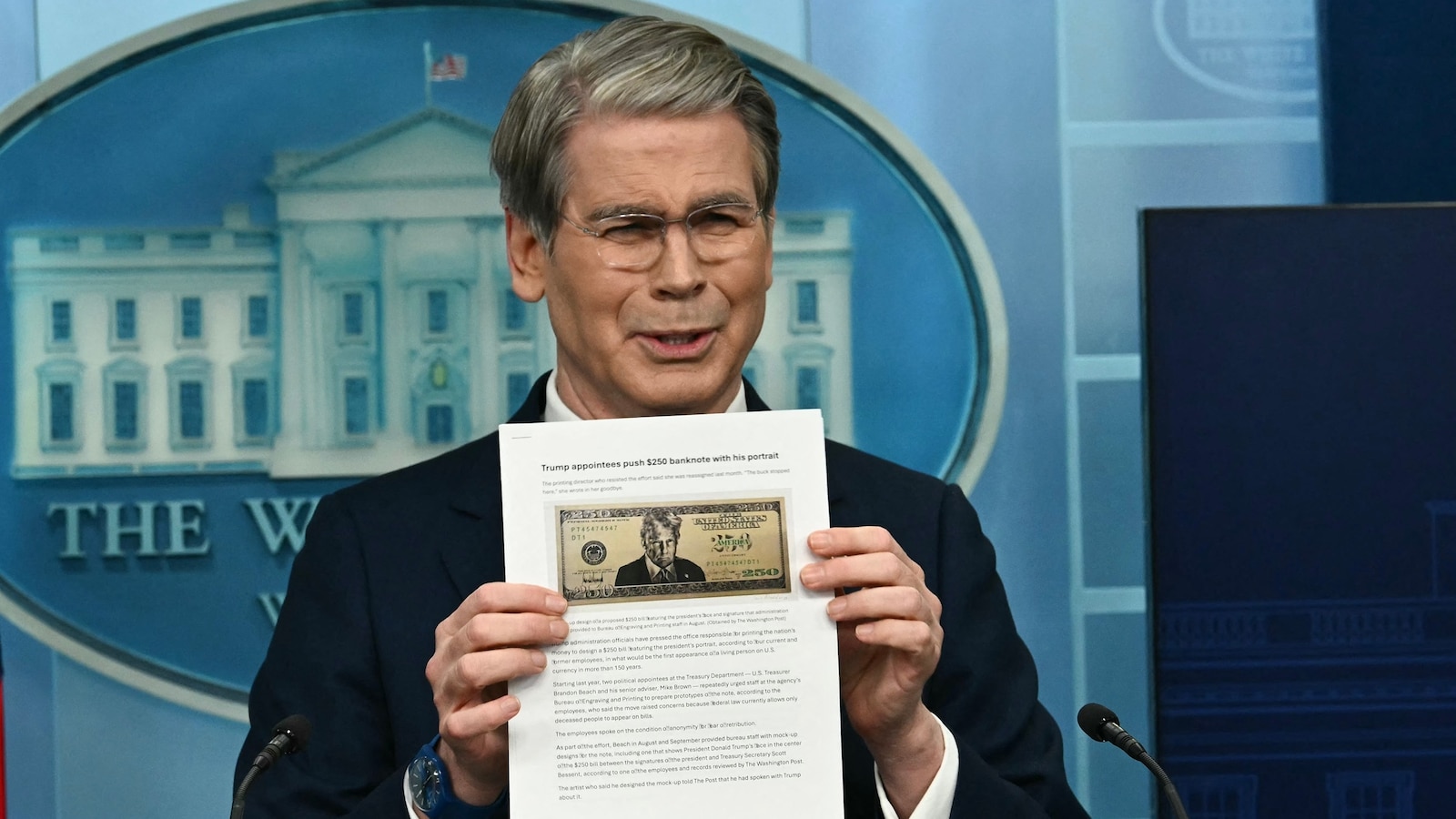
The U.S. Treasury Department is reportedly advancing plans for a $250 bill featuring the portrait and signature of former President Donald Trump. This initiative is contingent on the passage of specific legislation that would allow a living person to be depicted on U.S. currency, a practice that has not occurred in over 150 years. Currently, federal law mandates that only deceased individuals can appear on U.S. money.
The proposal, introduced by Republican Representative Joe Wilson of South Carolina, has garnered 15 Republican cosponsors but has not yet passed through the House Financial Services Committee, where it has remained for over a year. The legislation would need to secure bipartisan support in the Senate, requiring 60 votes for passage. Without legislative approval, the bill would expire at the end of the 119th Congress, although it could be reintroduced in the next session.
Legislative Hurdles and Political Context
During a recent press briefing, Treasury Secretary Scott Bessent emphasized that the initiative is a proactive measure in anticipation of potential legislative changes. He stated, “As Treasury secretary, I have two mandates for U.S. currency at present: that no living person can be on U.S. currency and the currency must say, ‘in God we trust.’ So right now, there is proposed legislation… to change the first requirement so that a living person, Donald J. Trump, could be on the $250 bill.” This statement underscores the legal barriers that currently exist regarding the depiction of living individuals on currency.
Bessent also addressed concerns about the appropriateness of featuring Trump on the bill amidst ongoing economic challenges faced by many Americans. He defended the proposal by stating, “I don’t think that there’s anything untoward about having the president of the United States… on the 250th anniversary bill.” This remark reflects an effort to position the bill as a commemorative piece rather than a political statement.
Financial Implications and Production Costs
The Treasury Department has assured the public that no taxpayer dollars will be used to produce the proposed $250 bill. Instead, the Bureau of Engraving and Printing finances its operations through the sale of products and services, meaning that the costs associated with the new bill would not impact federal funding. This approach aims to mitigate public concern regarding the financial implications of introducing a new currency denomination.
Public Reception and Political Support
While the proposal has some support among Republican lawmakers, there has been no indication of backing from higher party leadership. The lack of cosponsorship from prominent Republican figures may suggest a cautious approach to the legislation, particularly given the divisive nature of Trump’s presidency. The absence of a unified party stance could impact the bill’s chances of advancing through Congress.
Broader Commemorative Initiatives
In addition to the proposed currency, the State Department plans to issue special edition passports featuring Trump’s portrait and signature to commemorate the anniversary of significant historical events. This initiative aligns with the broader theme of recognizing Trump’s contributions to the country, although it may also face scrutiny from those who oppose his presidency.
As discussions continue, the future of the $250 bill remains uncertain. Should the legislation pass, it would mark a significant departure from established norms regarding U.S. currency and could set a precedent for future commemorative bills.
Frequently Asked Questions
What is the purpose of the proposed $250 bill?
The proposed $250 bill aims to commemorate significant historical events and feature Donald Trump’s portrait and signature, pending legislative approval.
What are the current legal restrictions on U.S. currency?
Current federal law prohibits living individuals from appearing on U.S. currency, allowing only deceased persons to be depicted.
How will the production of the new bill be funded?
The Treasury Department has stated that no taxpayer dollars will be used; instead, the Bureau of Engraving and Printing will fund the project through product sales.
What challenges does the bill face in Congress?
The bill has not yet passed the House Financial Services Committee and requires bipartisan support to advance in the Senate, which may be difficult given the current political climate.
Are there any other commemorative initiatives related to Trump?
Yes, the State Department plans to issue special edition passports featuring Trump’s portrait and signature as part of the commemorative efforts.
Source: ABC News



Leave a Reply