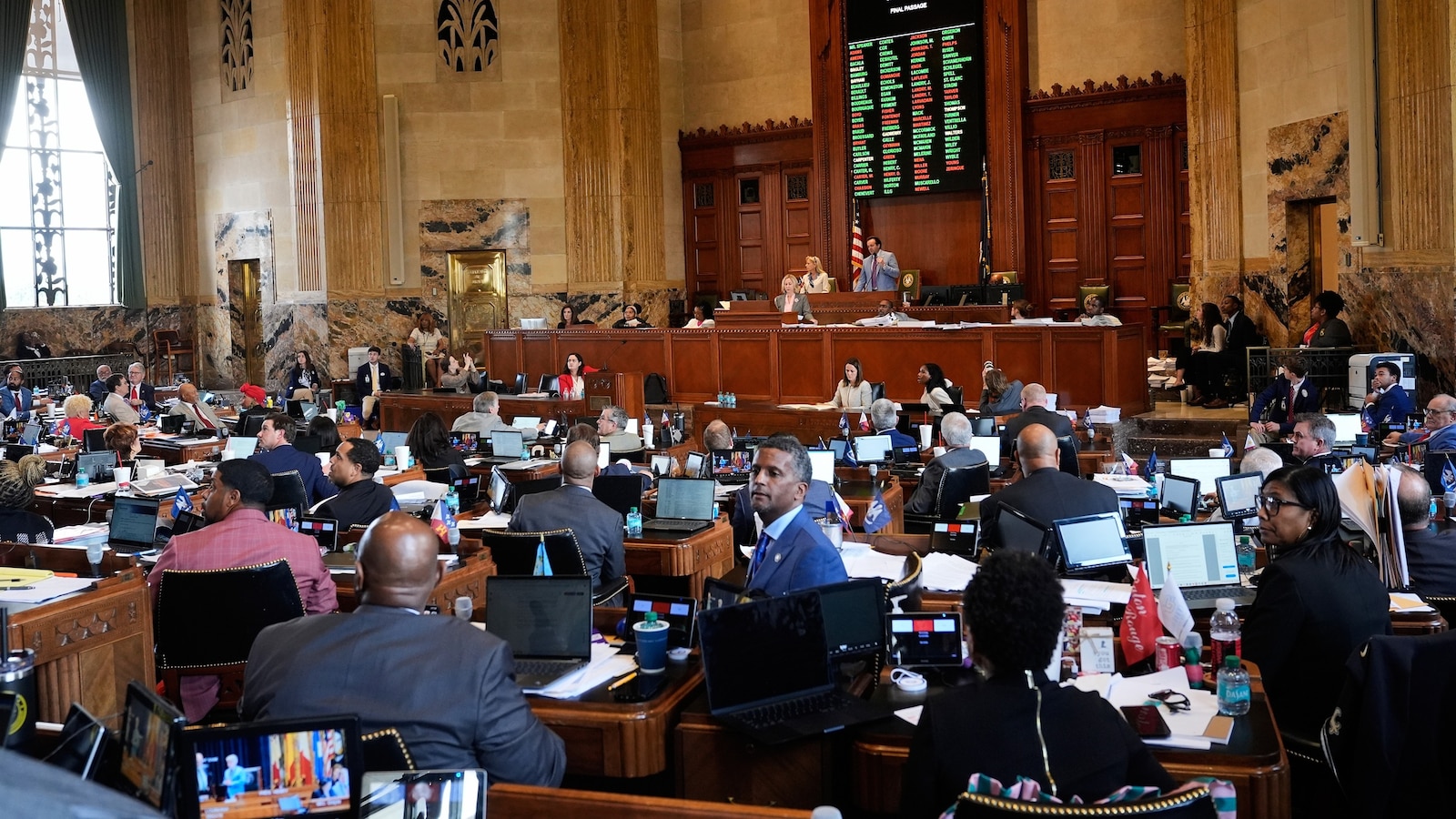
On Friday, Louisiana lawmakers approved a new congressional map that has significant implications for the state’s political landscape, particularly ahead of the 2026 midterm elections. This newly drawn map could enable Republicans to flip one of the two Democratic-held U.S. House seats in Louisiana. The decision comes in the wake of a U.S. Supreme Court ruling that deemed the previous map unconstitutional due to racial gerrymandering.
The approval of the new map has been met with considerable dissent from Democratic lawmakers, who argue that it undermines representation for Black voters. The map eliminates one of the two majority-Black congressional districts in the state, raising concerns about its potential discriminatory impact. This change is particularly noteworthy given the historical context of racial representation in Louisiana, where the legacy of disenfranchisement remains a critical issue.
Political Context and Implications
The new congressional map was passed by the Louisiana Senate after a contentious debate. State Sen. Royce Duplessis, a Democrat, expressed strong opposition to the map, stating, “Y’all, at the beginning of this process, I would have said that we are building a house on a broken foundation. Now, it feels more like quicksand, because we’re in 2026 going into a map that we know is flawed, that we know is going to get struck down.” His comments reflect a broader concern among Democrats regarding the fairness and legality of the redistricting process.
In contrast, Republican state Sen. Jay Morris defended the map, asserting that it adheres to traditional redistricting criteria and is not racially gerrymandered. He emphasized that the map provides fair representation for all regions of the state. Morris stated, “I think we have a map here that meets all the traditional redistricting criteria…and it’s very fair, and we should approve it.” This division highlights the ongoing partisan conflict surrounding redistricting efforts in Louisiana.
Supreme Court’s Impact on Redistricting
The approval of the new map follows a landmark ruling by the U.S. Supreme Court, which invalidated the previous congressional map for being an unconstitutional racial gerrymander. This decision has prompted a reevaluation of congressional maps in Louisiana and other states, with Democrats warning that such changes could drastically reduce the number of Black representatives in Congress.
The ruling has created a sense of urgency among lawmakers to redraw district lines in compliance with the Court’s decision, leading to the swift approval of the new map. However, critics argue that the new configuration still fails to adequately represent the interests of Black voters, particularly in a state with a significant African American population.
Responses from Lawmakers
During the floor debate leading up to the map’s approval, several Democratic representatives voiced their concerns about the elimination of the majority-Black district. State Rep. Kyle Green, a member of the Louisiana Legislative Black Caucus, condemned the map as discriminatory, emphasizing the historical context of racial disenfranchisement in the state. He stated, “I want to ask you to remember the argument that we should now be colorblind about a congressional map, in this state of all states, requires forgetting a quantity of history that I don’t believe any of us has the right to forget.”
Conversely, Republican lawmakers, including Rep. Beau Beaullieu, argued that the map was a necessary response to the Supreme Court’s ruling. Beaullieu noted that the map is similar to one previously passed in 2022, which had five Republican districts and one Democrat district. He asserted that the map complies with traditional redistricting principles while maximizing partisan advantage.
Future Challenges and Legal Uncertainties
As the new congressional map is set to take effect, its future remains uncertain. Legal experts and lawmakers alike anticipate potential challenges to the map, particularly from civil rights groups and Democratic representatives who argue that it violates the Voting Rights Act. The prospect of litigation could further complicate Louisiana’s political landscape as the 2026 elections approach.
The implications of this new map extend beyond the immediate political gains for Republicans; they also raise critical questions about representation, equity, and the ongoing struggle for civil rights in Louisiana. As the state navigates these changes, the impact on voters and the broader political climate will be closely monitored.
Frequently Asked Questions
What changes does the new congressional map bring?
The new map eliminates one majority-Black congressional district, potentially allowing Republicans to gain a seat in the House.
Why was the previous map struck down?
The U.S. Supreme Court ruled the previous map unconstitutional due to racial gerrymandering.
How have lawmakers reacted to the new map?
Democratic lawmakers have expressed concerns about discrimination and representation, while Republicans argue the map meets redistricting criteria.
What are the potential legal challenges to the new map?
Legal experts anticipate challenges from civil rights groups and Democrats, arguing that the map violates the Voting Rights Act.
What are the implications of this map for future elections?
The map could significantly impact the political balance in Louisiana, affecting representation in Congress.
For more updates, visit QuickFeedNews.
Source: Source




Leave a Reply