Key Highlights & Detailed Overview
Online cognitive tests used to be treated as simple score machines: a visitor answered a handful of questions, received a number, and left. That format still exists, but the stronger products in this category are moving in a different direction. They are becoming full digital experiences built around visual reasoning, memory practice, repeat engagement, and clearer explanations of what a result can and cannot mean.
The shift matters because users now expect more than a single number. A modern test page has to explain the type of reasoning being measured, show how the experience is framed, provide a useful result, and avoid pretending to replace clinical or educational assessment. That balance is especially important in areas like intelligence-style challenges, ADHD screeners, anxiety questionnaires, and other self-assessment tools that people often discover through search.
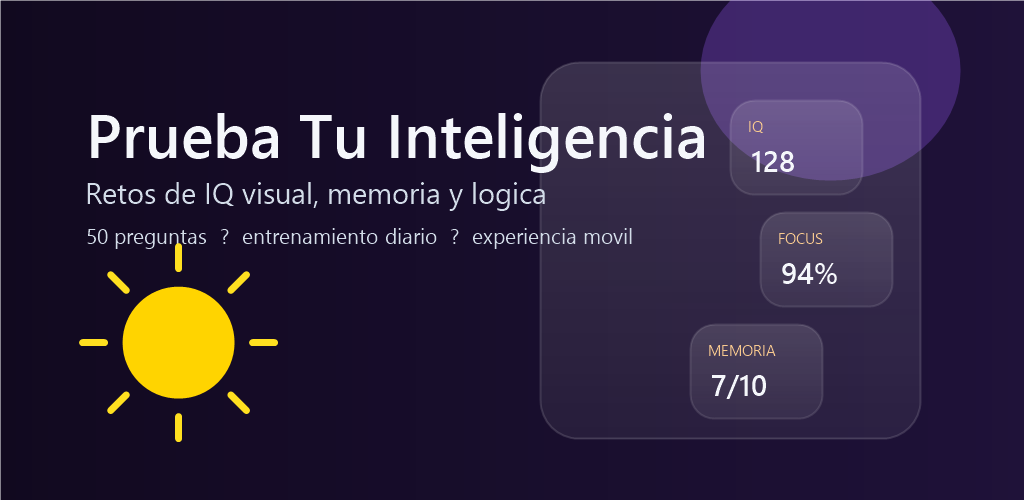
Visual reasoning tests are one example. They tend to rely on patterns, matrices, sequences, and rule changes rather than long verbal prompts. That makes them fast to start and easy to use on a phone. It also makes them naturally shareable, because users can understand the challenge without needing a long tutorial. For readers who want a plain-language explanation of this format, Test Your IQ’s guide to visual IQ breaks down how pattern recognition and abstract reasoning tasks are commonly framed online.
The better products also avoid one of the biggest weaknesses of older quiz sites: thin results. A score without context can feel exciting for a few seconds, but it rarely builds trust. A more useful report explains accuracy, percentile-style interpretation, stronger areas, weaker areas, and what kind of practice may help the user improve their performance on similar tasks. This does not turn a web test into a formal psychological evaluation, but it does make the experience more transparent.
Repeat use is another reason the category is changing. A one-time quiz has limited retention. A product that adds short memory drills, number recall, pattern practice, or daily challenges gives users a reason to come back. This is closer to how consumer learning and fitness products work: the first session creates curiosity, while the repeated sessions create habit. That product layer is becoming just as important as the initial assessment.
Responsible wording is also becoming a competitive advantage. Search users often arrive with sensitive questions about attention, memory, intelligence, anxiety, or focus. A serious site should tell visitors when a tool is educational, when it is entertainment, and when a licensed professional is needed. That clarity protects users and makes the brand look more credible. In this space, exaggerated promises can produce clicks, but careful framing is what supports long-term trust.
There is also a technical side. Strong cognitive-testing websites need fast loading, clean mobile design, crawlable educational pages, clear privacy language, and structured internal linking. Search engines need to understand that the site is more than a single interactive screen. Supporting articles about visual IQ, pattern recognition, working memory, and methodology help explain the product to users and give search crawlers a fuller map of the site.
One example of this broader approach is Test Your IQ, which combines a visual IQ-style challenge with educational pages, memory drills, and responsible support content. The important lesson is not that every site should copy one format. It is that online assessment products are strongest when the test, the result, the explanation, and the surrounding content all support the same promise.
For publishers and product builders, the takeaway is simple: cognitive tests can no longer rely on curiosity alone. The winners will be the sites that make the experience fast, credible, repeatable, and honest about its limits. In a crowded search category, that combination is more valuable than another thin score page.
Summary and Outlook
As this situation unfolds, the editorial desk at Quick Feed News will continue to track major announcements, market-moving signals, and regulatory reviews. For more related insights on technological developments and U.S. business headlines, keep exploring our homepage.
Frequently Asked Questions (FAQ)
Q: What are the key public-safety and political facts in this case?
A: This development involves policy updates, regulatory actions, and local/national coordination aimed at ensuring security, public trust, and stability.
Q: What actions are being taken by local or federal authorities?
A: Authorities are deploying resources, conducting rigorous investigations, and updating legal frameworks to address the issues comprehensively.
Q: How can citizens or local communities stay informed?
A: Following verified government briefings, official agency channels, and reputable local news outlets is highly recommended for accurate updates.
More Stories
 The best AI dictation apps, tested and rankedMay 02, 2026
 Tesla Reports Q1 2026 Earnings Amid Plans for Optimus Robot FactoryApr 22, 2026
 SpaceX Offers $60 Billion to Acquire AI Startup Cursor, Disrupting $2 Billion FundraiseApr 22, 2026
 SpaceX Acknowledges Challenges with Orbital AI Data Centers Ahead of IPOApr 22, 2026
Leave a Reply