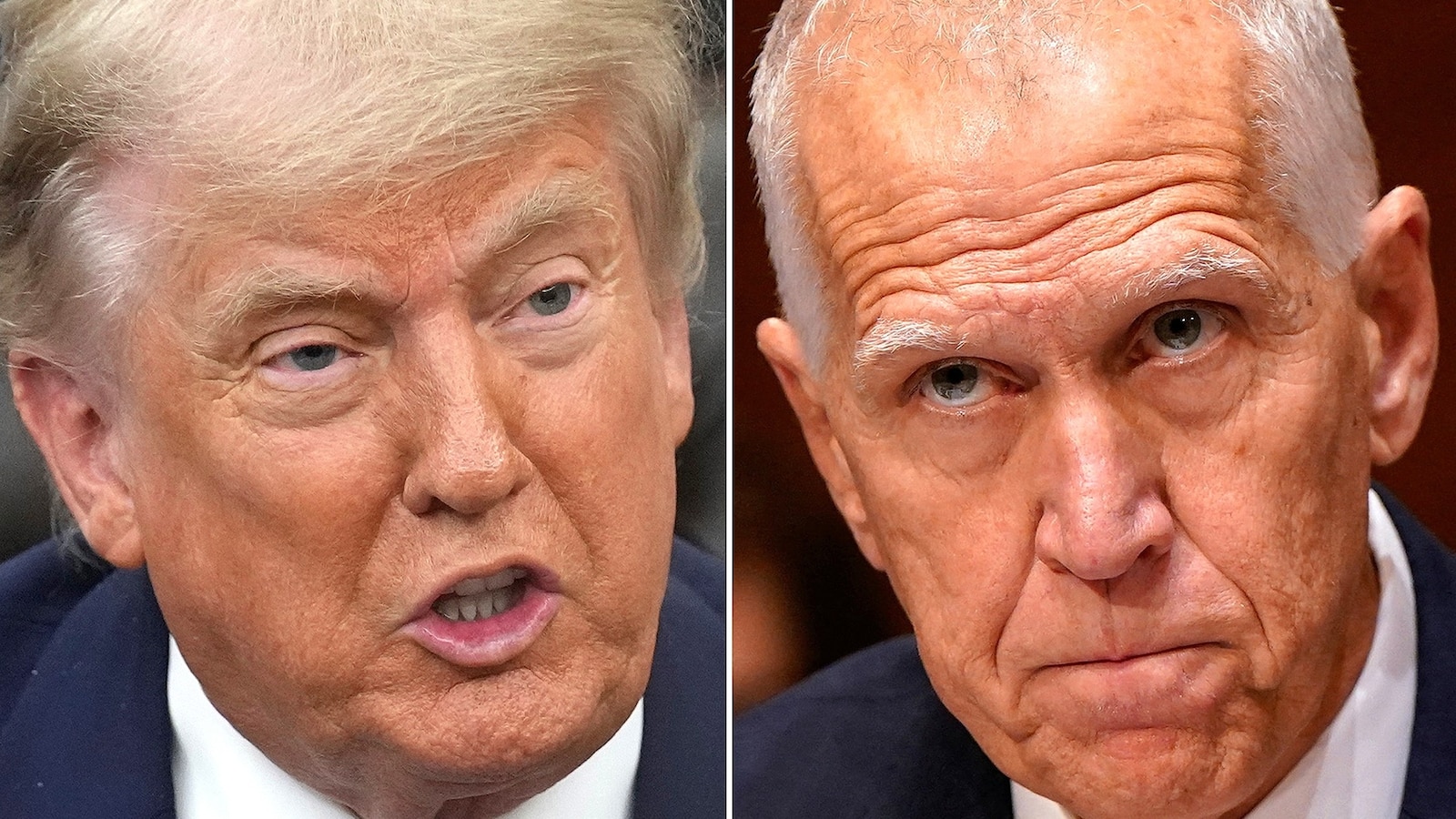
Former President Donald Trump has publicly criticized Republican Senator Thom Tillis and others in his party, calling them “RINOs” (Republicans In Name Only) and “quitters” amid a growing revolt concerning a proposed $1.8 billion “Anti-Weaponization Fund.” This fund has come under scrutiny from various Republican lawmakers, who argue it could potentially compensate individuals involved in violent acts against law enforcement, including participants from the January 6 Capitol riot.
Trump’s comments come as the GOP grapples with internal divisions over the fund, which was established as part of a settlement in Trump’s $10 billion lawsuit against the Internal Revenue Service (IRS). The fund aims to provide restitution to those who claim they were unjustly targeted by the Biden administration. Critics, including Tillis, have labeled the fund a “payout pot for punks,” suggesting that it could reward individuals who have engaged in violent behavior.
Background on the Anti-Weaponization Fund
The Anti-Weaponization Fund was created to address allegations of political targeting by the Biden administration, with Trump asserting that it is a necessary measure for justice. However, the fund has faced significant backlash from within the Republican Party. Lawmakers like Tillis have expressed concerns that it could inadvertently benefit those who have committed violence, stating, “These people don’t deserve restitution; they — many of them deserve to be in prison.”
Trump’s Response to Criticism
In response to the backlash, Trump took to social media to defend the fund, claiming that he “gave up a lot of money” by allowing it to proceed and could have profited significantly from the IRS settlement. He framed the fund as a means to help those who have been “abused by an evil, corrupt, and weaponized Biden Administration” and insisted that it would ultimately strengthen the Republican Party.
Reactions from Republican Lawmakers
Many Republican lawmakers have voiced their discontent with the fund and Trump’s approach. Senator Bill Cassidy, who recently lost his primary race after Trump endorsed his opponent, criticized the fund as a misallocation of resources, stating that constituents are more concerned about everyday expenses than funding a large compensation program with no clear accountability.
Implications for GOP Unity
The ongoing conflict over the Anti-Weaponization Fund highlights a broader struggle within the Republican Party, as factions emerge over Trump’s influence and the party’s direction. As some lawmakers openly criticize Trump and his policies, the potential for further division raises questions about the party’s unity heading into future elections.
Trump’s Influence on Republican Candidates
Trump’s remarks regarding Tillis’s decision not to seek reelection suggest a growing tension between the former president and certain GOP incumbents. Trump indicated that Tillis’s retirement was influenced by his refusal to endorse him for another term, stating, “When I told him that I would not, under any circumstances, endorse him for another run, too much work and drama, he immediately quit the race.” This highlights the significant impact Trump continues to have on Republican candidates and their electoral prospects.
As the Republican Party navigates these internal conflicts, the future of the Anti-Weaponization Fund and its implications for party unity remain uncertain. The situation is evolving, and further developments are expected as lawmakers continue to debate the fund’s merits and potential consequences.
Frequently Asked Questions
What is the Anti-Weaponization Fund?
The Anti-Weaponization Fund is a proposed $1.8 billion fund aimed at compensating individuals who allege they were unjustly targeted by the Biden administration.
Why did Trump criticize Senator Tillis?
Trump criticized Tillis for his opposition to the Anti-Weaponization Fund and labeled him a “RINO” and a “quitter” for not seeking reelection.
What are the main concerns regarding the fund?
Critics argue that the fund could compensate individuals involved in violent acts against law enforcement, including those from the January 6 Capitol riot.
How have other Republican lawmakers responded?
Several GOP lawmakers have expressed concerns about the fund, suggesting that it misallocates resources and lacks accountability.
What does this conflict mean for the GOP?
The conflict underscores divisions within the Republican Party, raising questions about its unity and direction as it approaches future elections.
Source: ABC News



Leave a Reply