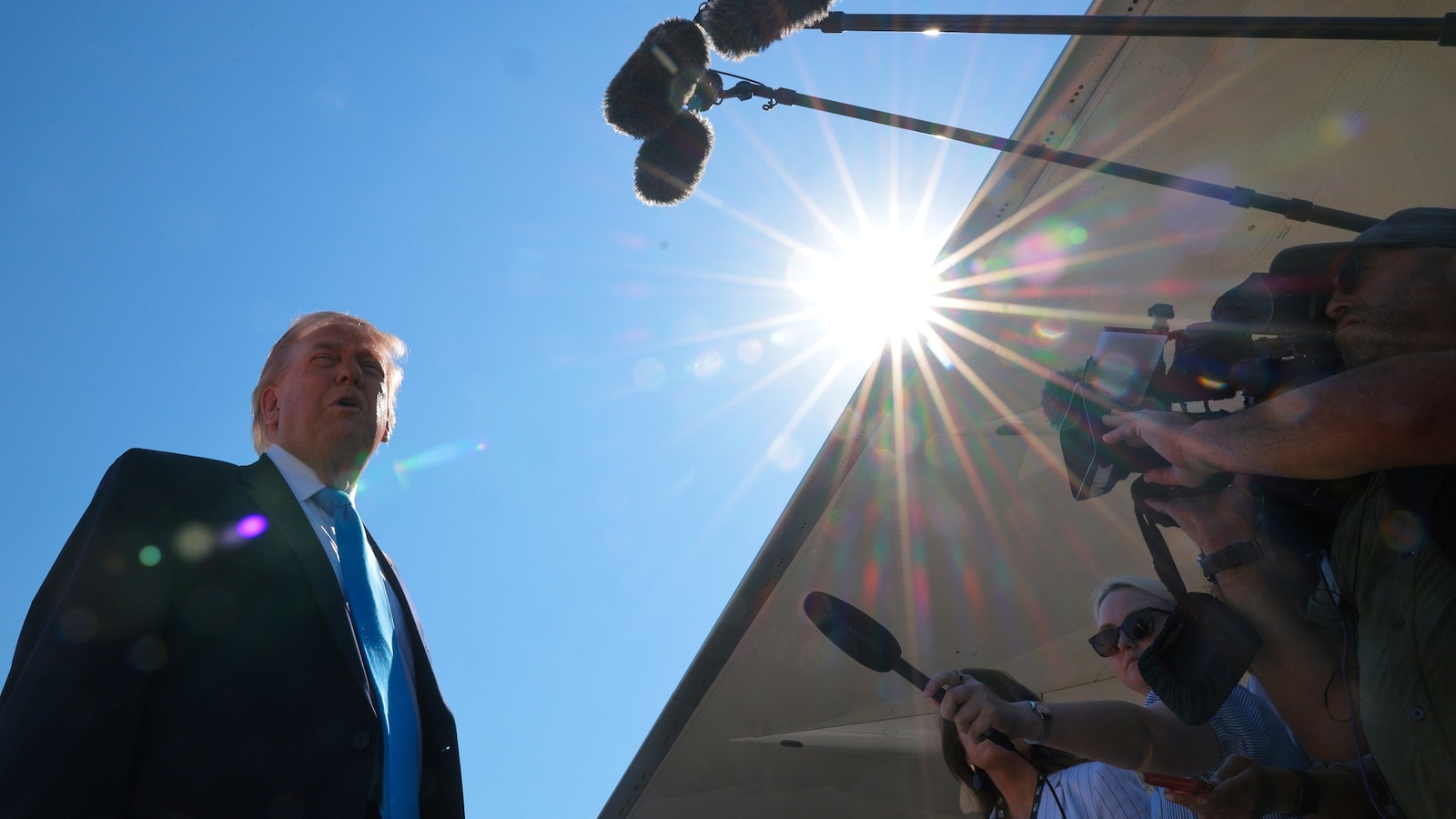
In a recent statement, President Donald Trump declared that he is in “no hurry” to finalize a peace deal with Iran, even as military operations continue in the region. This announcement comes 12 weeks into the ongoing conflict, which has seen significant U.S.-Israeli military actions against Iranian targets. Trump emphasized that he is not interested in a limited agreement focused solely on reopening the strategic Strait of Hormuz, instead advocating for a comprehensive resolution to the conflict.
Trump’s remarks were made during a press conference where he reflected on the duration of the conflict, comparing it to other prolonged military engagements in history. He mentioned the lengthy U.S. involvement in Vietnam, Afghanistan, and Iraq, indicating that three months of conflict, much of which has been marked by a ceasefire, is relatively brief in comparison. His comments come at a time when international diplomatic efforts are fraught with challenges and the stakes remain high.
Military Operations and Ceasefire Developments
On February 28, Trump announced the initiation of “major combat operations” against Iran, which involved significant joint strikes by U.S. and Israeli forces targeting military and government sites. Following these operations, a two-week ceasefire was established, but initial talks in Pakistan aimed at reaching a peace agreement have not yielded positive results. Trump has since extended the ceasefire indefinitely while maintaining a blockade until negotiations reach a conclusion.
Israel’s Position and Preparedness
In light of the ongoing negotiations and military actions, Israeli officials have stated that the country is closely monitoring discussions between the U.S. and Iran. An official from the Israel Defense Forces (IDF) indicated that they are in constant communication with U.S. counterparts and have prepared various operational plans in response to potential developments. This readiness underscores Israel’s strategic concerns regarding Iranian military capabilities and intentions in the region.
International Reactions and Calls for De-escalation
Amidst the escalating tensions, Chinese President Xi Jinping and Russian President Vladimir Putin condemned the military strikes against Iran during a joint meeting in Beijing. They characterized these actions as violations of international law and called for an urgent end to the conflict. Their statement highlighted the necessity for a return to dialogue and negotiations to prevent further escalation and instability in the Middle East.
Potential Regional Implications of Renewed Conflict
The Islamic Revolutionary Guard Corps (IRGC) of Iran has warned that any resumption of fighting could extend the conflict beyond the immediate region. This statement reflects concerns that renewed military actions could lead to broader hostilities, drawing in neighboring countries and potentially altering the geopolitical landscape in the Middle East. The IRGC’s remarks emphasize the high stakes involved in the ongoing military operations and the urgent need for diplomatic solutions.
Conclusion: The Path Forward
As the situation in Iran continues to evolve, the international community watches closely. President Trump’s reluctance to rush into a peace deal suggests a strategic approach aimed at achieving a more comprehensive resolution rather than a temporary fix. However, the ongoing military operations, coupled with international calls for de-escalation, create a complex environment that could influence the future of U.S.-Iran relations and regional stability.
For more updates, visit QuickFeedNews.
Frequently Asked Questions
What prompted Trump’s comments about the peace deal with Iran?
Trump’s comments came amid ongoing military operations and a desire for a comprehensive resolution rather than a limited agreement.
What are the implications of the military operations against Iran?
The military operations have raised concerns about regional stability and the potential for broader conflict if hostilities resume.
How is Israel responding to the situation with Iran?
Israel is closely monitoring U.S.-Iran talks and has prepared operational plans in case the situation escalates further.
What did Xi Jinping and Vladimir Putin say about the conflict?
They condemned the U.S.-Israeli strikes and called for an urgent return to negotiations to de-escalate the situation.
What does the IRGC warn about the future of the conflict?
The IRGC warned that renewed fighting could extend beyond the region, potentially leading to wider hostilities.
Source: ABC News
Leave a Reply