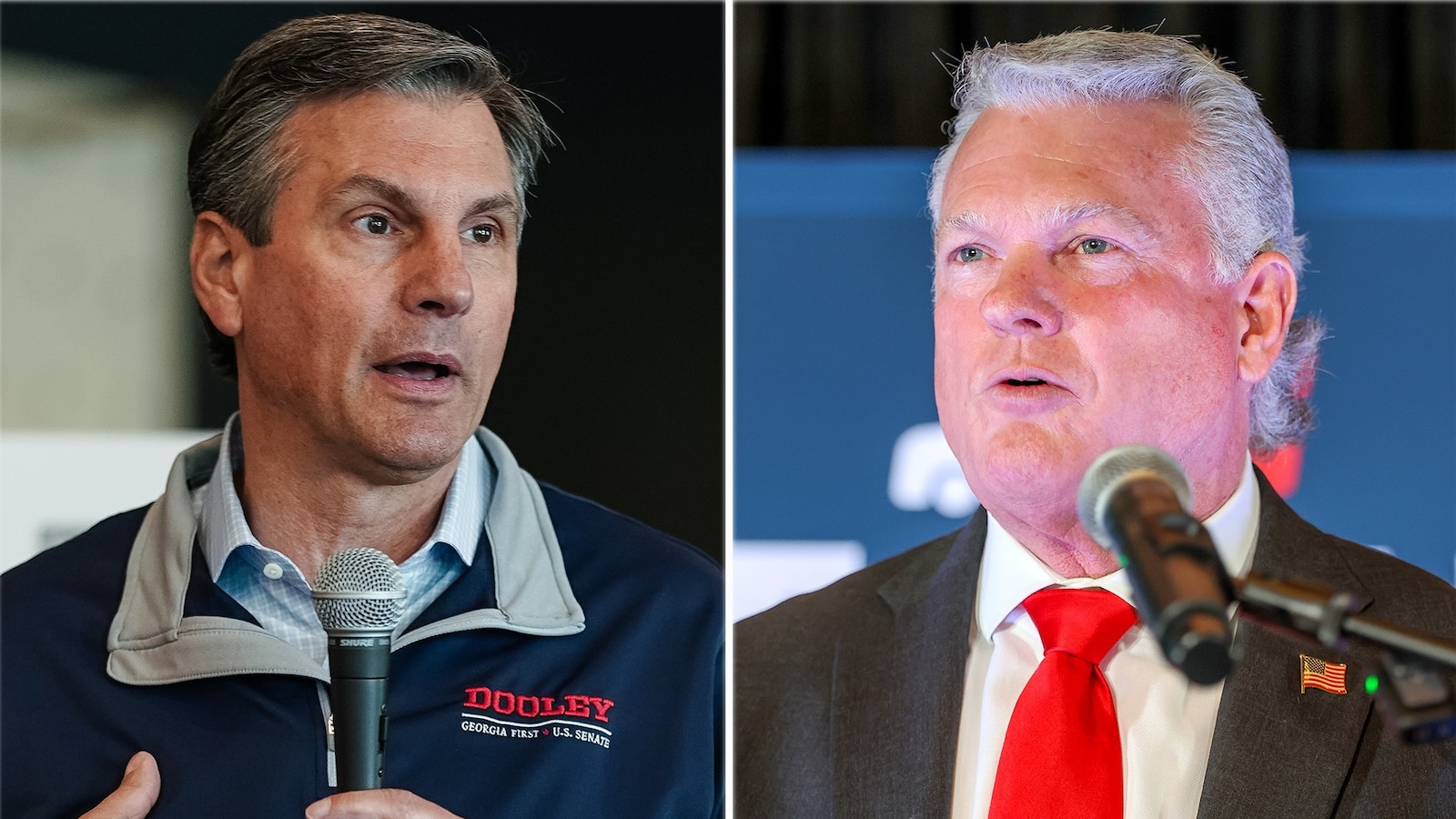
In a surprising turn of events just hours before a crucial Republican primary runoff in Georgia, former President Donald Trump endorsed Congressman Mike Collins for the U.S. Senate. This endorsement comes at a critical time, as over 450,000 voters had already cast their ballots during early voting. The runoff will determine who will face Democratic incumbent Senator Jon Ossoff in the November election, a contest that could significantly influence the balance of power in the Senate.
Trump’s endorsement of Collins, whom he referred to as a “Highly Respected Congressman who has been with me from the very beginning,” puts him at odds with Georgia Governor Brian Kemp, who has endorsed Collins’ opponent, Derek Dooley. The endorsement not only highlights the divisions within the Republican Party in Georgia but also underscores the ongoing tensions between Trump and Kemp, which have roots in the aftermath of the 2020 presidential election.
Political Rivalries in Georgia
The rivalry between Trump and Kemp is not new. Their relationship soured after Kemp refused to overturn the 2020 election results, which Trump falsely claimed were fraudulent. This feud escalated when Trump endorsed a primary challenger to Kemp in 2022, but Kemp ultimately retained his position. Now, as Kemp prepares to leave office due to term limits, the stakes are higher than ever for both politicians.
Dooley, a former football coach and a political outsider, has positioned himself as a candidate who acknowledges the legitimacy of the 2020 election results, a stance that has drawn Trump’s ire. In his endorsement, Trump criticized Dooley for admitting that Joe Biden won Georgia, stating, “[Dooley] said that I lost Georgia in 2020 when, in actuality, the facts have now proven that I won by a lot!” This statement is contentious, as Georgia officials certified Biden’s victory after multiple audits.
The Implications of Trump’s Endorsement
Trump’s endorsement is seen as a litmus test for the influence of the MAGA wing of the Republican Party in Georgia. Collins has actively courted Trump’s base, emphasizing his loyalty to the former president throughout his campaign. The outcome of this runoff will not only affect the Senate race but also signal the strength of Trump’s endorsement power in Georgia’s political landscape.
Political analysts suggest that this race may serve as a proxy battle between the two factions of Georgia’s Republican Party: the traditional conservatives aligned with Kemp and the more radical MAGA supporters backing Collins. Political science professor Andra Gillespie noted that the runoff is a significant test for the non-MAGA wing of the party, questioning whether it can maintain its influence in the face of Trump’s endorsement.
Recent Controversies Surrounding Collins
Collins has been a polarizing figure, known for his controversial social media presence. Recently, he faced backlash for a post that mocked a Dooley campaign adviser following a personal tragedy involving the adviser’s wife. This incident raised questions about Collins’ judgment and the tone of his campaign, drawing attention to the potential risks of his approach as he seeks to galvanize support.
As the runoff approaches, the dynamics between Collins and Dooley will be closely monitored, particularly in light of Kemp’s continued influence and support for Dooley. The governor’s recent endorsement in the gubernatorial primary further emphasizes his commitment to countering Trump’s impact in Georgia.
The Road Ahead for Georgia Republicans
The upcoming Senate race is not just about individual candidates; it reflects broader trends within the Republican Party as it grapples with its identity post-Trump. The outcome of the runoff will likely have lasting implications for the party’s direction and its ability to unify ahead of the general election against Ossoff.
As voters prepare to head to the polls, the tension between Trump and Kemp, along with the contrasting narratives presented by Collins and Dooley, will shape the political discourse in Georgia. The results of this runoff could set the tone for future elections and the Republican Party’s strategy moving forward.
Frequently Asked Questions
What is the significance of Trump’s endorsement for Collins?
Trump’s endorsement is seen as a critical factor that could sway voters in Collins’ favor, particularly among the MAGA base, and may influence the overall dynamics of the Republican Party in Georgia.
How does this race reflect the divisions within the GOP?
The contest between Collins and Dooley illustrates the ongoing struggle within the Republican Party between traditional conservatives and the more extreme MAGA faction, highlighting differing views on election integrity and party loyalty.
What are the implications for Governor Kemp?
Kemp’s support for Dooley puts his political influence on the line, as the outcome of the runoff could impact his future aspirations, including a potential presidential run in 2028.
What has been the public reaction to Collins’ controversies?
Collins’ controversial social media posts have drawn criticism and raised concerns about his judgment, potentially alienating some voters who may view his behavior as inappropriate for a Senate candidate.
When is the runoff election taking place?
The runoff election is scheduled for Tuesday, and it will determine which Republican candidate will challenge Democratic Senator Jon Ossoff in the November general election.
Source: ABC News



Leave a Reply