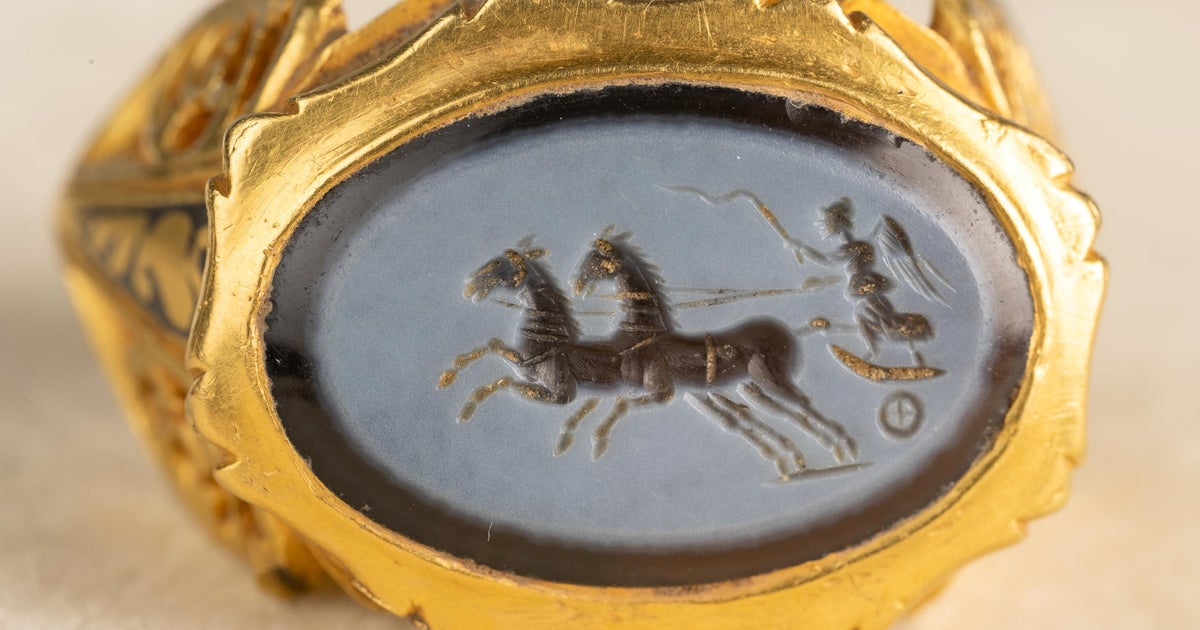
A remarkable discovery has emerged from the fields of Ilminster, England, where an amateur metal detectorist unearthed a rare gold ring dating back to the Roman era, approximately 1,700 years ago. The ring, known as the Ilminster Ring, features an intricate depiction of Victoria, the Roman goddess of victory, and has been purchased by the South West Heritage Trust for just over $105,000. This find not only highlights the rich historical tapestry of the region but also underscores the potential for significant archaeological discoveries by amateur enthusiasts.
Kevin Minto, the metal detectorist responsible for this significant find, initially discovered the ring in 2018 while searching a field in Ilminster. The South West Heritage Trust has described the ring as large and heavy, weighing 48 grams, with elaborate goldwork and a beautifully executed intaglio. Amal Khreisheh, a senior curator at the trust, commented on the ring’s uniqueness, stating that while other examples exist, the combination of its features makes it a spectacular artifact, comparable only to discoveries made on the continent.
Historical Significance of the Ilminster Ring
The Ilminster Ring is believed to date back to around 279 AD, a time marked by significant unrest in the Roman Empire. Khreisheh noted that the ring likely offers insights into how the inhabitants of South Somerset navigated this tumultuous period. It is suggested that the ring was buried shortly after its creation, around 297 AD, as part of a hoard that included coins, lead, and pottery.
Connection to Other Roman Discoveries
Ilminster is not new to archaeological finds; it is part of Somerset, a region known for its rich Roman history. The ring was discovered alongside other coins that Minto found, which adds to the narrative of Roman life in the area. Notably, Somerset is home to the famous Frome Hoard, a collection of over 52,000 Roman coins discovered in 2010 by another amateur metal detectorist. This hoard is currently housed at the Museum of Somerset, where the Ilminster Ring will also be displayed.
The Role of Amateur Metal Detectorists
The discovery of the Ilminster Ring serves as a testament to the valuable contributions that amateur metal detectorists can make to archaeology. Their efforts can lead to significant historical finds that enrich our understanding of the past. The South West Heritage Trust encourages responsible metal detecting, emphasizing the importance of reporting finds to preserve historical context and ensure artifacts are properly documented and displayed.
Future of the Ilminster Ring
With its recent acquisition by the South West Heritage Trust, the Ilminster Ring is set to become a focal point for visitors interested in Roman history. The trust’s commitment to displaying the ring alongside other significant artifacts from the region will help educate the public about the rich history of Roman Somerset and the importance of preserving such treasures for future generations.
The future of the Ilminster Ring looks promising as it joins the ranks of other notable finds in Somerset, contributing to a broader understanding of the Roman presence in Britain.
Frequently Asked Questions
What is the Ilminster Ring?
The Ilminster Ring is a rare gold Roman ring featuring an intaglio of Victoria, the goddess of victory, discovered by an amateur metal detectorist in England.
How much was the Ilminster Ring sold for?
The South West Heritage Trust purchased the Ilminster Ring for just over 78,000 pounds, approximately $105,000.
What does the ring depict?
The ring depicts Victoria riding a chariot pulled by two horses, showcasing intricate craftsmanship from the Roman era.
Where will the Ilminster Ring be displayed?
The Ilminster Ring will be displayed at the Museum of Somerset, alongside other significant Roman artifacts.
What is the historical context of the ring’s discovery?
The ring dates back to around 279 AD, a period of unrest in the Roman Empire, and is believed to have been buried shortly after its creation in 297 AD as part of a hoard.
Source: CBS News




Leave a Reply