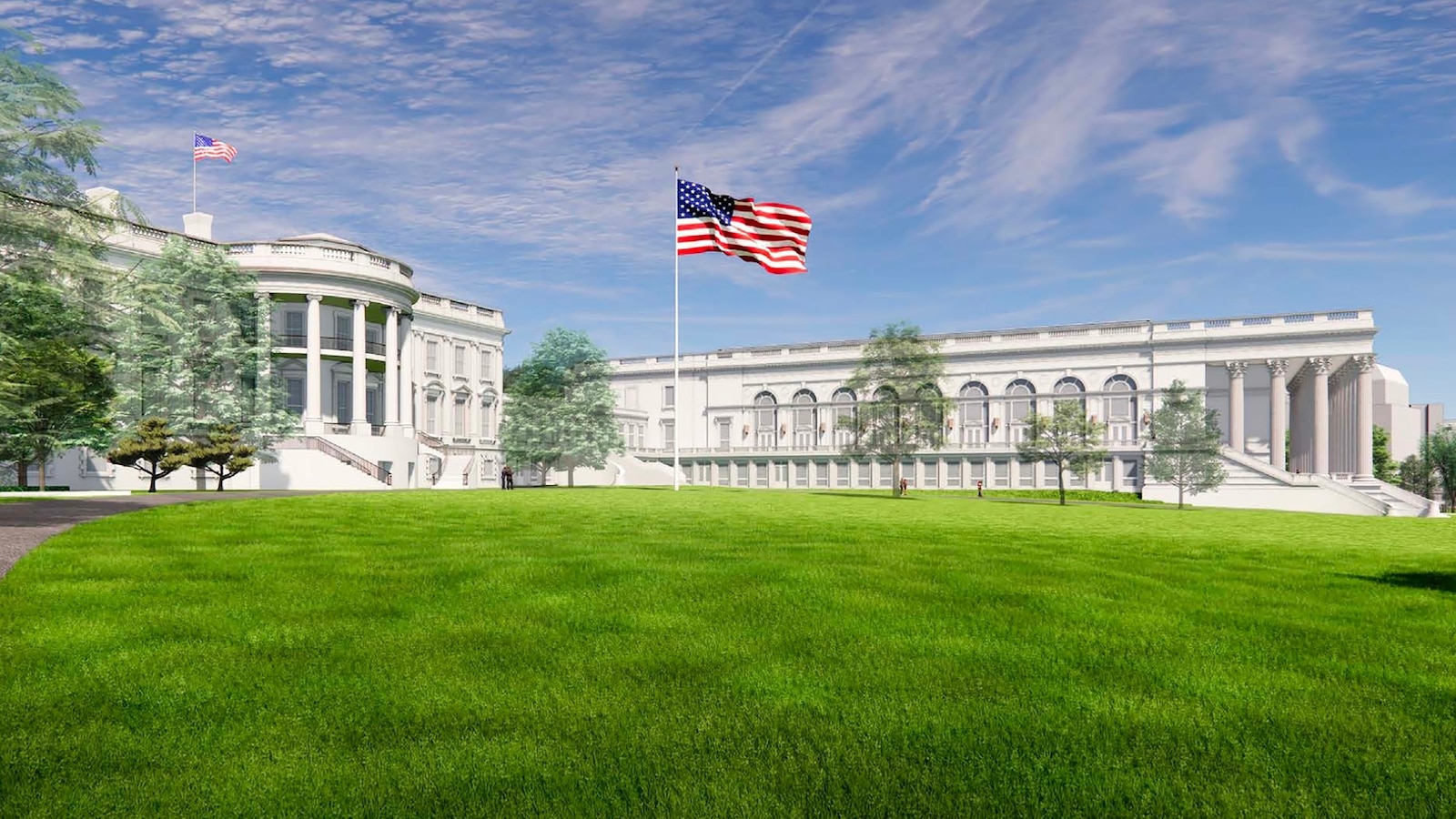
The plans for a new ballroom at the White House, proposed by former President Donald Trump, are now in the hands of a three-judge panel from the U.S. Court of Appeals for the D.C. Circuit. This case has significant implications for presidential authority and historic preservation, as it examines whether Trump can proceed with construction that has been halted by a lower court ruling.
At the heart of the dispute is a lawsuit initiated by the National Trust for Historic Preservation, which argues that Trump has exceeded his authority by attempting to build a large ballroom without Congressional approval. U.S. District Judge Richard Leon ruled in March that the president’s plans were not authorized under existing law, effectively blocking the project. However, the appellate panel issued a stay on Leon’s order in April, allowing construction to continue while the appeal is considered.
Legal Context of the Ballroom Project
The Trump administration contends that the ballroom is part of a broader “East Wing Modernization Project” and is essential for national security. They cite recent security incidents near the White House, including shootings that raised concerns about the safety of the president and the complex. The administration argues that the ballroom would serve as a fortified space for hosting important events like inaugurations and state dinners.
Arguments from the National Trust for Historic Preservation
The National Trust for Historic Preservation maintains that the project violates the separation of powers, asserting that it is Congress, not the president, that has jurisdiction over the White House grounds. Their legal filings emphasize the importance of adhering to the law and maintaining the integrity of presidential authority. They argue that Judge Leon was correct in his ruling, which emphasized the need for Congressional authorization for such a significant construction project.
Implications for Presidential Authority
This case raises important questions about the extent of presidential power in making unilateral decisions regarding federal properties. The outcome could set a precedent for future administrations and their ability to undertake similar projects without legislative approval. The court’s decision will also have ramifications for the role of historic preservationists in protecting national landmarks.
Current Status and Next Steps
The appellate court is expected to hear oral arguments soon, with judges Patricia Millett, Neomi Rao, and Brad Garcia presiding over the case. The timeline for a decision remains unclear, but the legal battle underscores the contentious nature of Trump’s presidency and the ongoing debates surrounding executive authority and historical preservation.
Potential Funding Issues
In a related development, Senate Republicans recently removed a proposed $1 billion funding provision that was intended to support immigration enforcement but also included funding for security measures related to the ballroom project. This decision raises further questions about the financial backing for the initiative and its feasibility moving forward.
As the case unfolds, it highlights the intersection of law, politics, and preservation efforts in the context of one of the nation’s most iconic buildings. Stakeholders on both sides of the argument are closely monitoring the proceedings, as the implications of the court’s ruling could resonate well beyond the current administration.
Frequently Asked Questions
What is the main issue in the appeals court case?
The main issue is whether Trump’s plans for a new ballroom can continue without Congressional approval, following a lower court’s ruling that halted construction.
Who is challenging the construction of the ballroom?
The National Trust for Historic Preservation is challenging the construction, arguing that it exceeds presidential authority and violates preservation laws.
What are the arguments for the ballroom’s construction?
The Trump administration argues that the ballroom is necessary for national security and as part of a modernization project for the East Wing of the White House.
What was the outcome of the lower court’s ruling?
The lower court ruled that Trump lacked the authority to build the ballroom without Congressional authorization, effectively blocking the project.
What are the potential implications of this case?
The case could set a precedent regarding presidential authority over federal properties and the role of historic preservationists in legal challenges.
For more updates, visit QuickFeedNews.
Source: Source




Leave a Reply